
I’m having an issue with the HiFi Rose RS150b recognizing a Chord M Scaler and Chord DAVE DAC. I’m running a brand new Nordost Frey 2 USB-C to USB-B cable from the HiFi Rose to the M Scaler, but the Rose doesn’t recognize the connection and I’m getting the “No USB DAC Found” message.
When completely bypassing the M Scaler and running the Nordost Frey 2 USB-C to USB-B cable from the HiFi Rose directly into the DAVE, I’m receiving the same message where the Rose doesn’t recognize the connection. I should mention that these two pieces of Chord equipment work perfectly on another system.
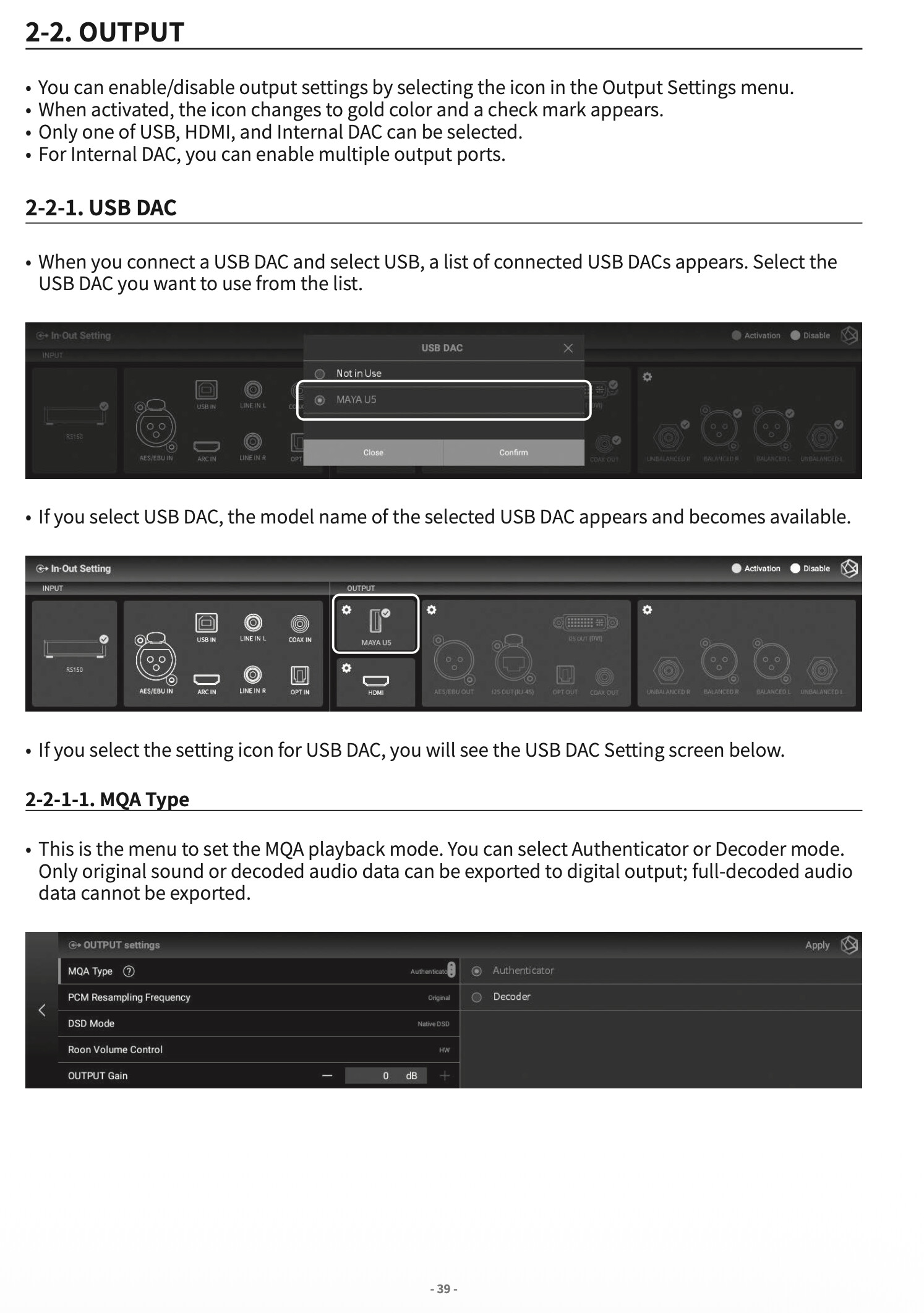
I purchased a cheap Fosi Audio ZD3 DAC on Amazon to rule out any issue with the Rose or Nordost USB cable. As soon as it was connected and I selected the USB output under the In/Out Settings screen, the Rose identified the Fosi DAC immediately and began streaming music.
A friend was gracious enough to bring over his Music Fidelity Nu-Vista DAC and I achieved the same result as soon as the Nordost USB cable was connected - the Rose identified the Nu-Vista DAC immediately.
Be it firmware or something else, is there a known issue with the Hifi Rose 150b identifying Chord equipment? Is there any solution? I love this Chord combination, so unfortunately if I can’t resolve this issue I’ll have to move on to a different brand of streamer. Thanks in advance for any suggestions.
Would still be a good idea to test Chord with a real USB cable.
We will forward this issue to our software team.
Once we receive their feedback, we will get back to you with an update.
In the meantime, if you have another USB cable available, we kindly ask you to test with it.
If possible, please try using a USB A to USB B cable, connecting the USB A port to the RS150B and the USB B port to your DAC, and check whether the device is recognized.
yet another stupid unhelpful comment.
That you don’t know what a USB cable is, and why scam companies like Norddolt do not make real USB cables is yours and only yours problem. So is your ignorance of the fact that trying a known good cable is a basic troubleshooting step.
Go back to diddling with your fuses, or whatever audiophiles do these days.
Why don’t you just leave these forums and let the members talk about whatever they want, without your sad little I’m holier than thou comments.
I wouldn’t say that!
Even I fell for the so-called “angel” singing cables once. Then I just bought a completely normal USB cable from Mediamarkt (Germany) to test it out, and I heard music—not angels playing the harp, but I had a connection, unlike with those overpriced crappy cables.
And @BorisM is right, you check the cables first. But no, it can’t be the cable, it cost $500, so the device must be crap.
With hi-fi, less is more.
Audio schools push the systems until almost nothing works anymore.
Up until recently I also used a Chord DAC connected to my Rose RS130.
Then, I used both the standard USB A-B cable that came with the DAC and then later a Chord Epic USB cable, both worked without any problems. One thing to note however is that both components must be switched off prior to changing the cables, then switch on the Rose and then the Chord to let the two pair together.
Hi,
I’m a DAVE and MScaler user with my RS130 and have not experienced any issue when directly connected - I tried the RSA720 Optical Hub and it just refused to work (despite requesting the upgrade firmware through this forum) - as per Wiggy’s suggestion, connect when powered down, then power up…such that a ‘handshake’ can happen and pairing be made. Best of luck…they are a fine combination.
In the olden days it wasn’t too surprising that people without relevant education (i.e. ones that were at least awake during physics classes in a Soviet high school, or took Electrical Engineering in an American college) would not know any better and when a salesman would push a fancy “audiophile” cable to go with their new shiny box (because margins on cables are quite astronomical) would gladly buy it.
But now we have this “internet” thing. Which is full of garbage, of course, but you still can find all the relevant information quite easily. There is basically no excuse for believing in “audiophile” cables. Especially in digital audiophile cables. And enough reports of those fancy cables quite often (far more often then with bottom of the barrel generic cables from your local equivalent of WalMart) failing to follow relevant standards and just not working.
Thanks to both you and @Wiggy for the suggestion. I always love to see when those of us in this community actually respect their fellow audiophiles and genuinely give helpful suggestions versus those like @BorisM above who attempt to leave witty comments (unsuccessfully of course) or try to crap on other music lovers because their components / speakers / cables are too expensive or too cheap. While I am an engineer (Civil, not Electrical) and have designed speakers in the past, I still respect everyone else’s opinion regardless of their experience or level of understanding.
In response to your suggestion, I actually always do that due to being overly obsessive. I’ve always shut my complete system down prior to installing or removing any cable.
Thanks again for the suggestion.
You seem to be greatly overestimating your engineering prowess. Having a Nordost cable (nay, even boasting of the fact) is a pretty good indicator.
PS No surprise that only “fellow audiophiles” tell you what you want to heart. “Audiophile” these days is an abbreviation for “deaf, dumb, and would not know an inductor from a capacitor if both fell on its head.”
Aww, pooww widdle audiophiles are getting upset. 
In my initial post, I was simply naming the components I was trying to connect and the type of cable I was using to connect them. At no point did I brag or boast about anything. Had it been an Amazon cable, I would have mentioned Amazon cable. But whatever man, enjoy your day.
Things have really gotten bad these days.
I have also built loudspeakers in the past, and I don’t brag about what kind of engineer or doctor I am. It’s really become fashionable today, I am! So you can believe me.
I built floor-standing speakers with a sandwich body back in the early 90s. The whole thing was filled with finely sifted beach sand. Today, bitumen is used. A speaker “engineer” also calculated the chassis of the floor-standing speakers. He calculated the internal volume of the boxes based on the chassis I had chosen.
When the floorstanding speakers were finished, they had a perfect finish, which I, as a carpenter, had ensured.
They sounded damn good and were damn heavy.
Today, I’m too old and I don’t feel like tinkering in the carpentry shop anymore. But when you build something yourself, it’s kind of nice.
My opinion is:
It’s the same as with expensive cables or hi-fi equipment.
You convince yourself that it’s the best.
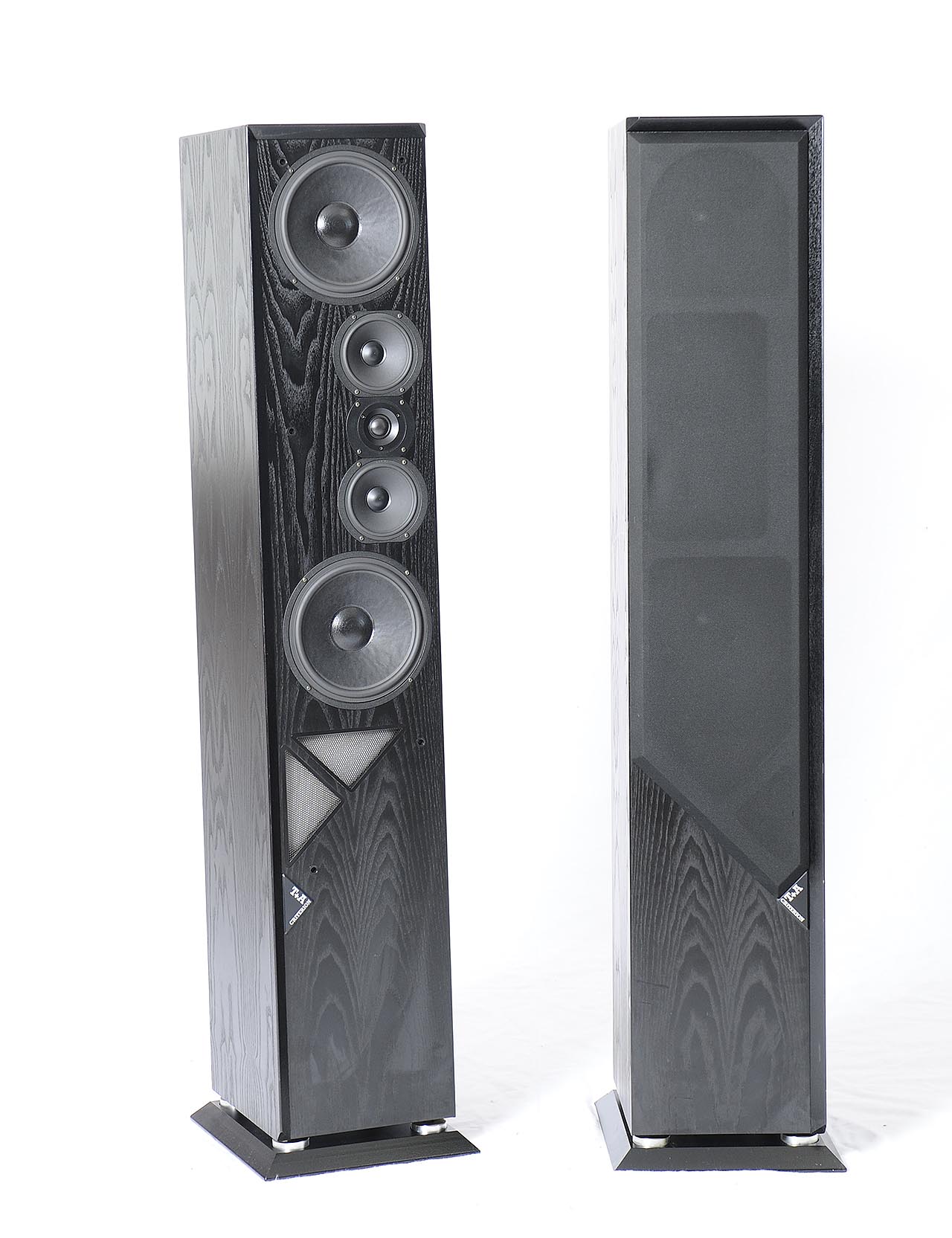
Back then, I also thought: My speakers sound the best. Until I bought the “T+A Criterion T-160E” in about 1994. The T stands for (3-way transmission line (D’Appolito arrangement). I was blown away in the 90s.
It played wonderfully musically, neutrally, and with tremendous plasticity, and the bass was bone dry. Few speakers have managed to throw sounds around my head like the T 160E.
From then on, it was clear to me that it’s not always what you buy or make yourself.
If I had the money again, I would buy T+A Transmissionline floorstanding speakers again.
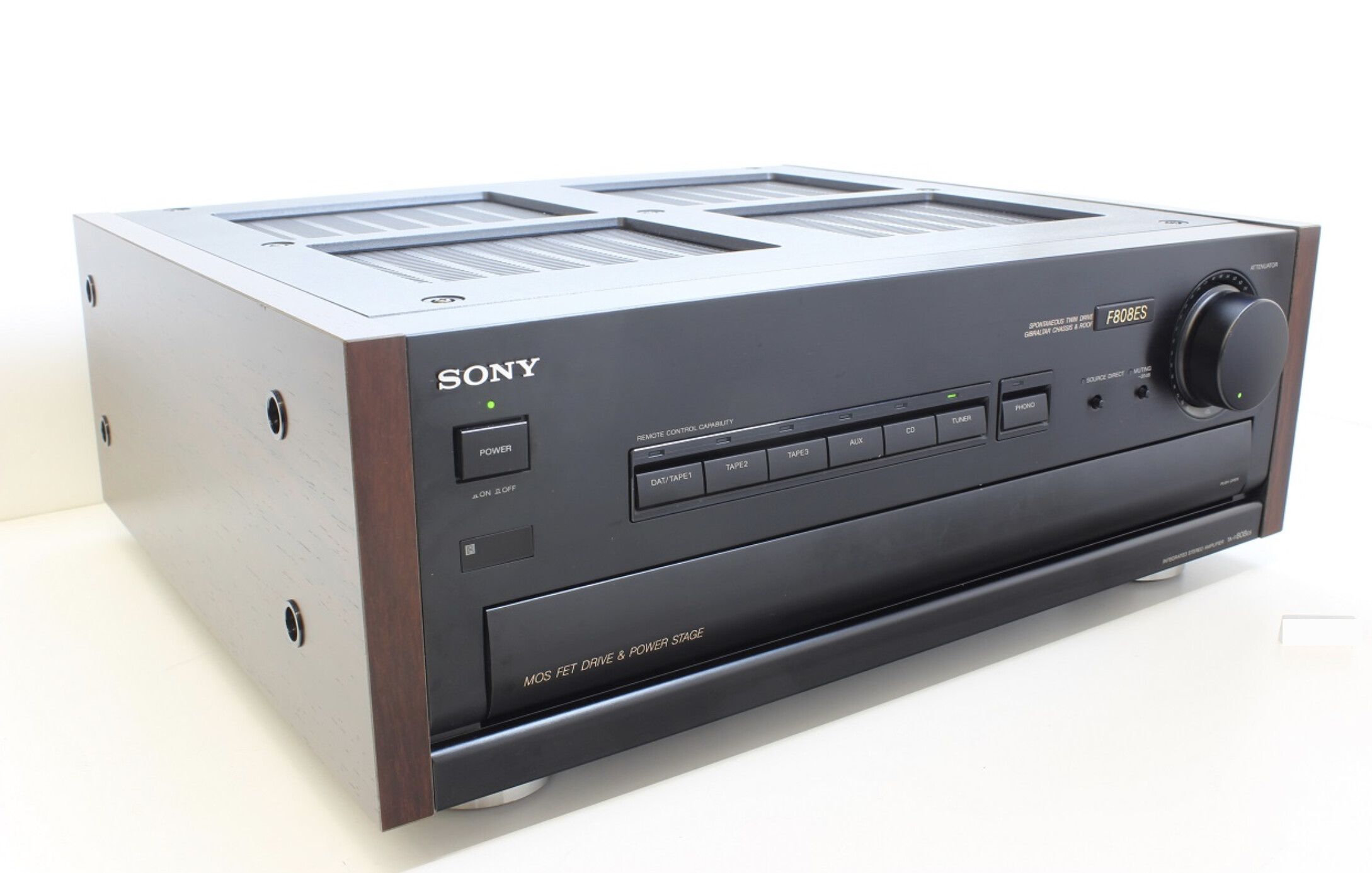
The T+A speakers were powered at that time by my Sony TA-F808ES black, which also had top performance.
Uh huh. You only made sure to mention 3 times that it is a (gasp!) Nordost cable. Which, incidentally, means that it is not a real USB cable. You could’ve just tried it with a cable that is, but no, you chose to get all bent out of shape because your precious little Nordoil got slighted.
And yeah, if you were a real engineer (something in very short supply at Nordost, AQ, and similar companies) you would not have that cable in the first place.
First of all, there is no USB C connection on the Dave, M-Scaler, or the Rose 150B. You should be coming from the USB A output of the Rose and into the USB B input of the M-Scaler. Also make sure that you have activated the USB A output in the Rose Input/Output screen.
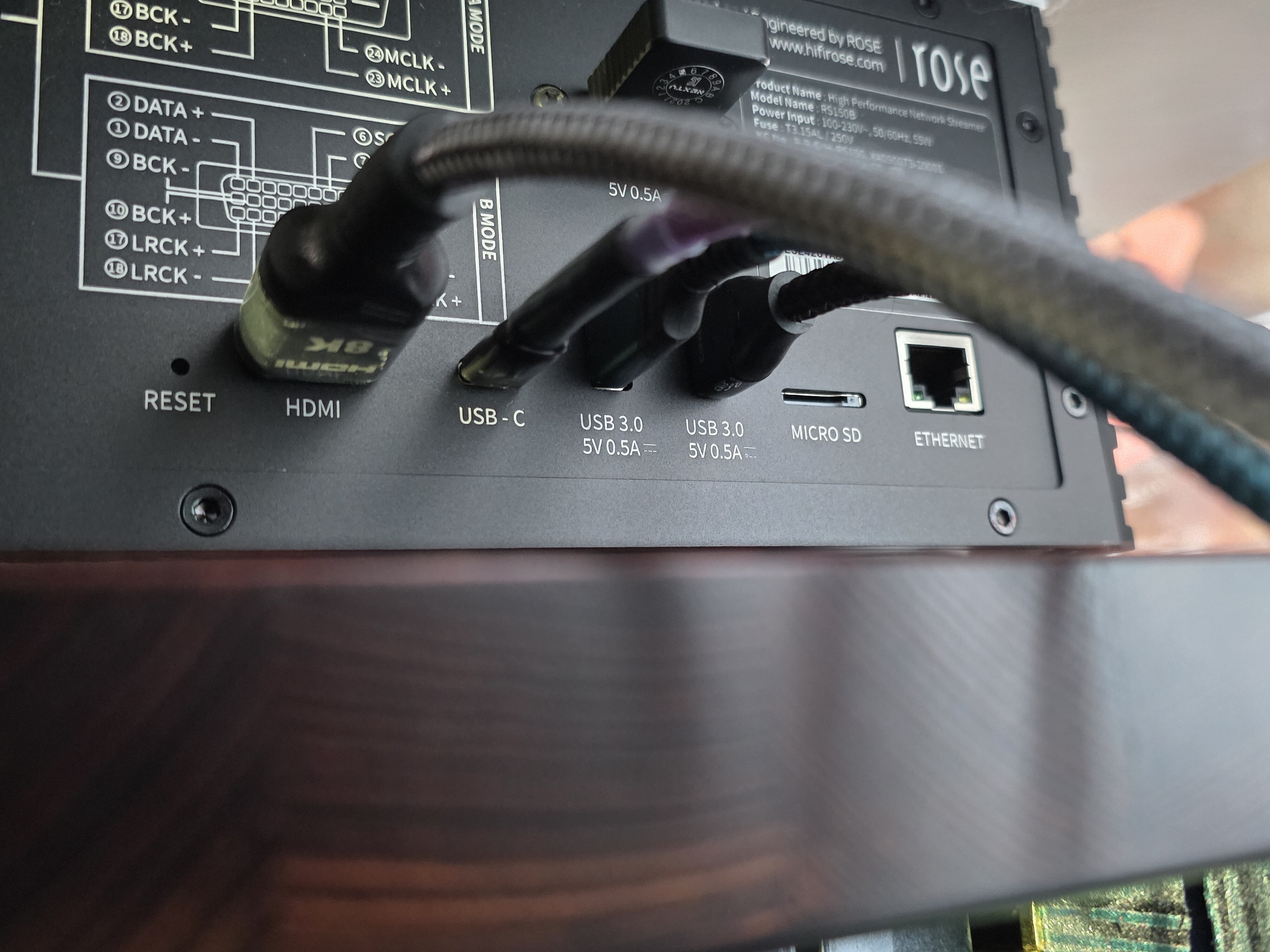
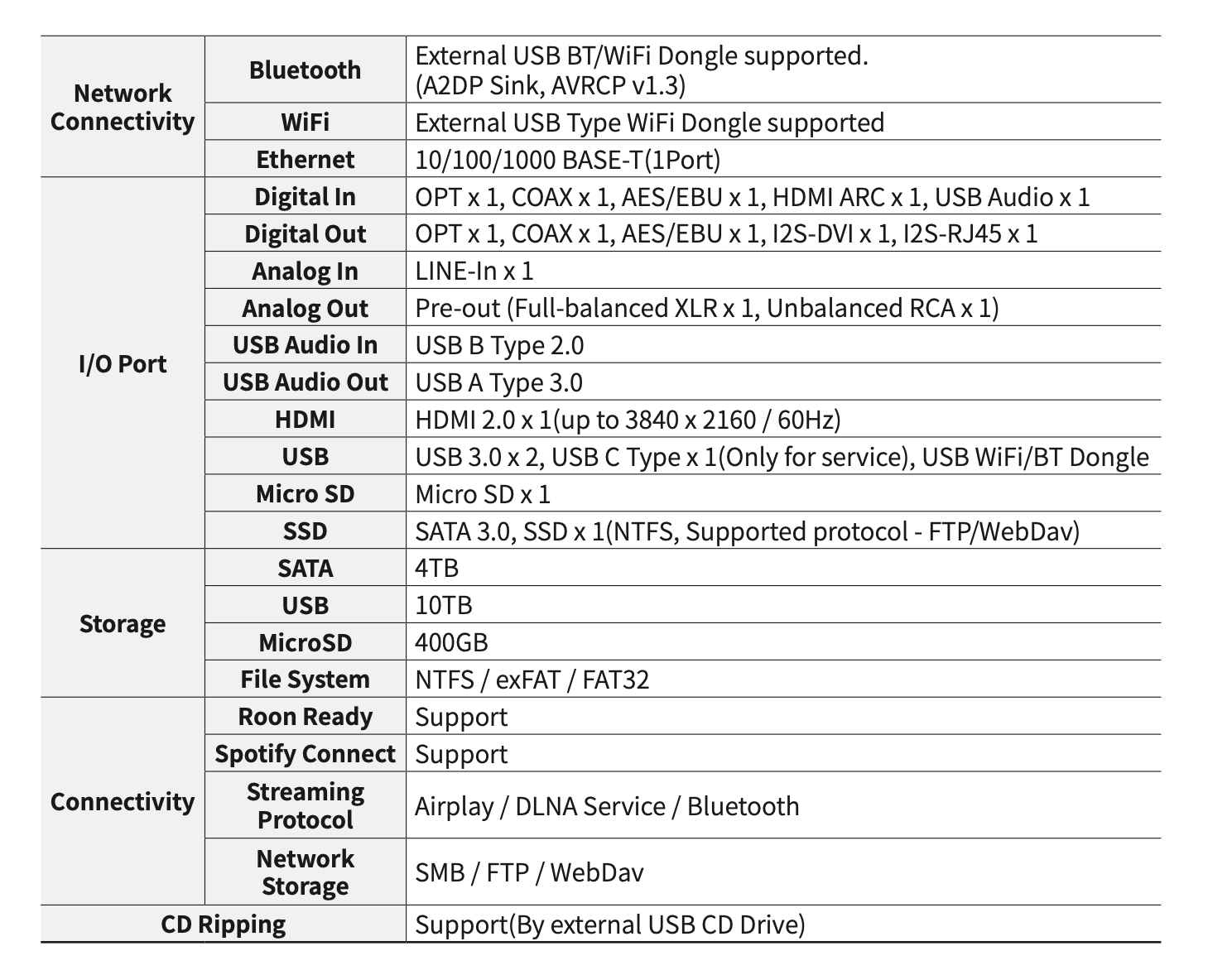
f you look at the manual you will see that that USB C port is for service only the only USB audio output is the USB A output also if you look at the screen for the inputs and outputs on the front display there’s only a USB A output shown.
See images of pages 39 and 55 from the manual.
I stand corrected. Thanks for the info Sir!