Comparison of streaming amplifiers

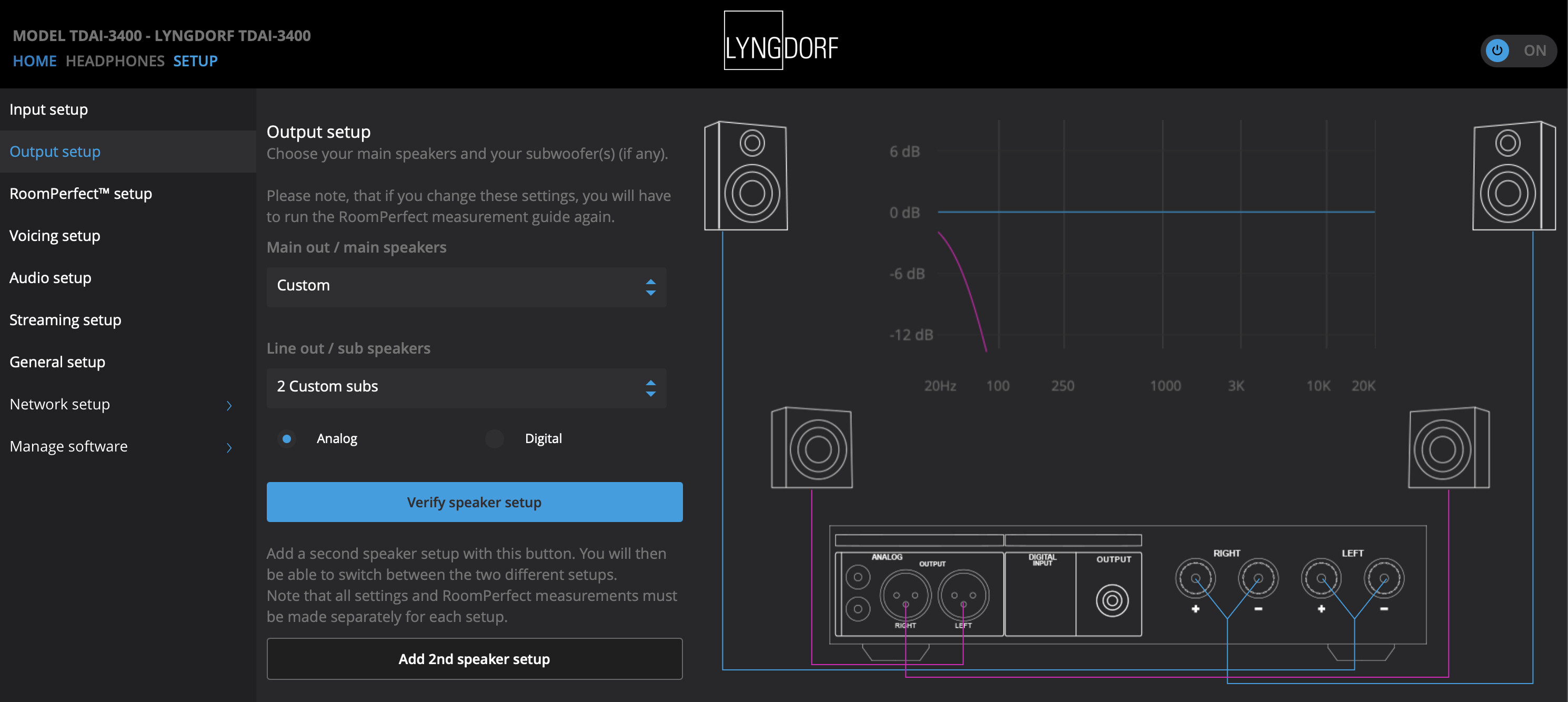
That’s an amplifier. Lyngdorf specifically is more of a power DAC where the digital signal directly controls high-power output. Still not a “digital amplifier” unless one wants to engage in some semantic gymnastics. Whether this approach is better or not is open to debate, but a properly set up Lyngdorf system sounds very good.

What is a distortion in a digital signal?

Yup. Unless you go for some very “audiophile” brand performance that is well beyond anything a human can hear is achievable, and at a very reasonable price point. Everything else is icing on the cake.

Well, there are some tube amps that, at least for a while, perform pretty much as well as solid state designs. Of course you have to keep swapping tubes to keep them operating that well.

Some also pretend to like the distortion some of tube designs create. And soft clipping. Calling tubes HiFi in the 21st century is laughable, of course.

There seems to be an actual filter in them at that frequency. I am sure they can output something below that but on a first look it appears to be a brand that does not really send their products to be measured… And I can’t ask you to taker REW to it :slight_smile:

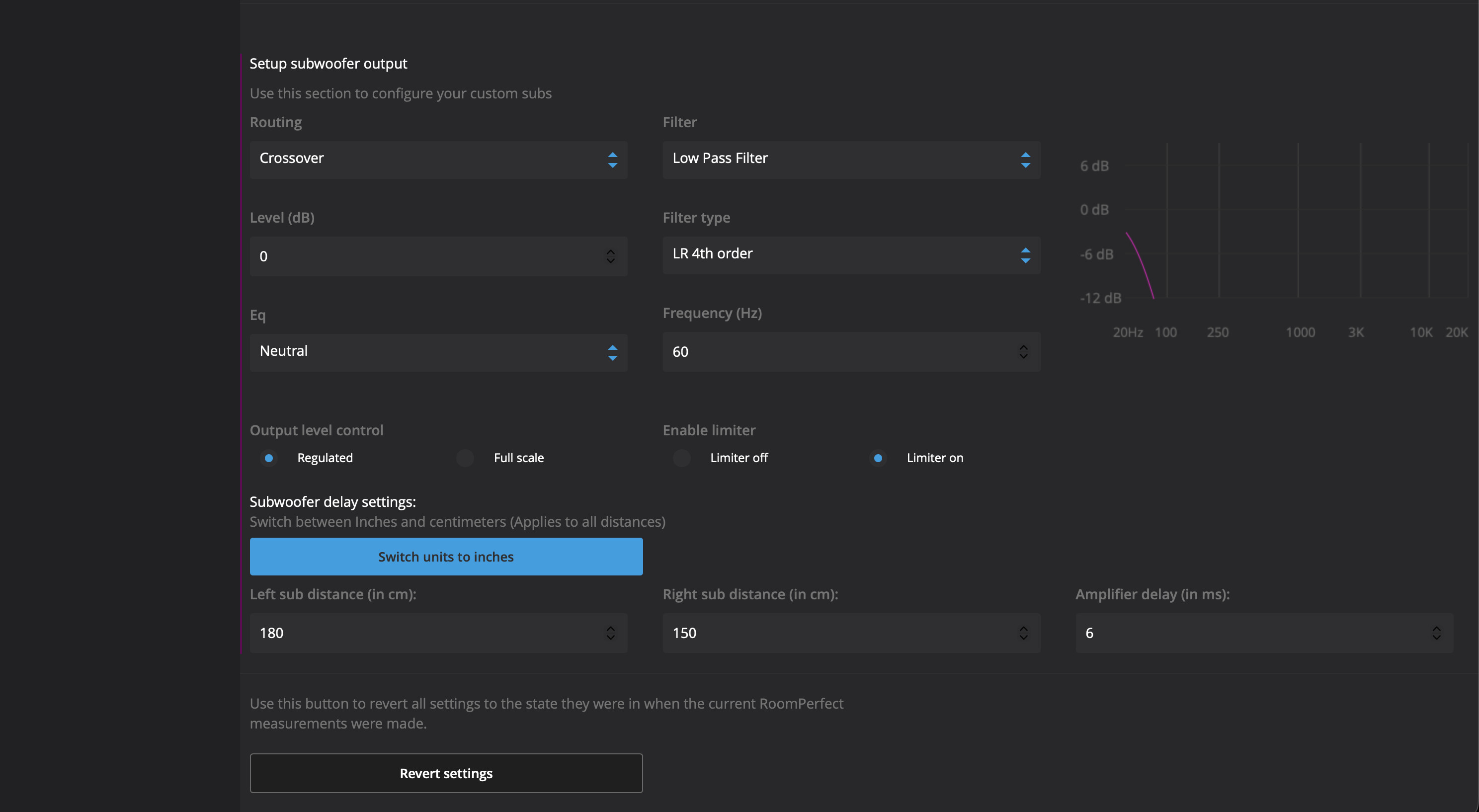
Looking at the design, it seems very unlikely that it would have much output and little distortion below 40Hz. If you like the sound you like the sound, but personally, rather than forcing them to play something they aren’t really designed to, I’d use the sub integration that your DMP-A10 already has and crossed them over around 50Hz or so. Just my opinion.

“I would use the subwoofer integration that your DMP-A10 has and cross them over at around 50 Hz.”

I have the B&W PV1 integrated with the Luxman L-550AXII and a cutoff of 70 Hz. But I don’t turn it on because there’s no need for it. These Chario speakers have an NRS (Nearsfield Reconstruction System) bass-reflex system with a downward-firing port. And it plays low bass quite well. :yum:
And thanks for the advice.
Maybe I’ll test it sometime with the calibration system.

I am sure it sounds nice – humans can reconstruct missing fundamentals from harmonics quite well. But, again, depending on what exactly you listen to, you might be missing things without even realizing it…

That’s just an expensive way of saying “these are ported speakers” :rofl: But the specs are given with the port, of course. And 6.5 inch woofers in it are still 6.5 inch, there is only so much bass they can do.

A0 on a piano is what… 27.5Hz, Cielos will be very much lower than -3dB there, and probably distorting more than one would like. And that’s not an organ, or some synthesized EDM made to make windows shake. Again, this is veering into personal priorities and preferences. Myself, I don’t care for EDM, but at least reproducing the entire range of a piano is a minimum requirement. I have a real one here that kids are banging on all day, and the leftmost key is supposed to be very loud. If the system reproduces it at a significantly lowered level it’s not really accurate. And I am not sure that it can even be generally EQ’d away – either you have to drop the overall levels significantly, or it will do some nasty digital clipping if you try to just increase levels around 30Hz significantly enough.

Of course the best thing to do is to actually run some measurements. Even something like Housecurve on an iPhone should give a pretty good indication of what the range actually reproduced in the room is.

1 Like

Thank you. :+1:
Good tips. I’ll play around with my B&W PV1 one of my free weekends. It’s a nice subwoofer in an aluminum enclosure - 500W packs a punch.

The measurement is quite good, built into the DSP of my DMP-A10. I immediately bought a microphone designed for measuring room acoustics for it. I haven’t gotten around to it yet, because it sounds great without correction.

It should be good. I don’t care much for their recent speakers but the sub should be fine.

My Missions have similar specs, going down to 42Hz and they benefit from a sub a lot.

Does DMP-A10 allow you to actually examine the measurements and see where the problems are?

“Does the DMP-A10 actually allow you to analyze measurements and detect problems?” —

I don’t know. But from the description, it looks promising. Looking at the DSP parameters, such as phase, delay, and frequency, it could be interesting. But I need to find time for this.

Indeed. It’s the time that is always the problem.

EverSolo’s DRC is pretty new and I haven’t see much of any reports on how well it really works yet.

EverSolo’s docs are a bit vague on the point, but at least you can export results so it should be possible to analyze them separately somehow. It does not seem to have quite as many knobs to twiddle as e.g. Focus Fidelity (that’s what I use to generate my room corrections) but should be functional enough to improve the sound. If anything it does show measurements on the screen so you would be able to see what (if any) problem areas are in your specific room.

1 Like

We’ll see how this equalization works. I had a poor experience a few years ago with the EQ digitsl on my old Harman Kardon HK990. It was a great dual-mono amplifier (but it wasn’t repairable here, so it died). I listened alternately with and without the equalization EQ for a while, and then I returned to the normal acoustics of my listening room, only with physiological bass and treble controls. I’m not entirely convinced by these inventions. But I’ll try again and report back on the forum.

:100::100::100: I can only agree, Boris. :ear:t2: :smiling_face_with_three_hearts: :ear:t2:

2 Likes

Perhaps the B&W is a little small for the music room. Try using two subwoofers and you’ll hear how they energize your room. With your speakers, I would start with at least 12" subs.

According to my subwoofer tester, with whom I am also in contact, the B&W is not a bad sub.

Check out the short videos on the B&W PV1D test.

I’m no pro either, I only had one sub and now I have two subs on Lyngdorf, all controlled by Lyngdorf, of course. It sounds different somehow because the bass is distributed differently and even more room modes are eliminated. After calibration with RoomRerfect, it sounds fantastic.

1 Like

“Perhaps the B&W is a bit too small for a music room. Try using two subwoofers and you’ll hear how they liven up the room. As for speakers, I’d start with at least 12-inch ones. :” -
You misunderstood me. :thinking:
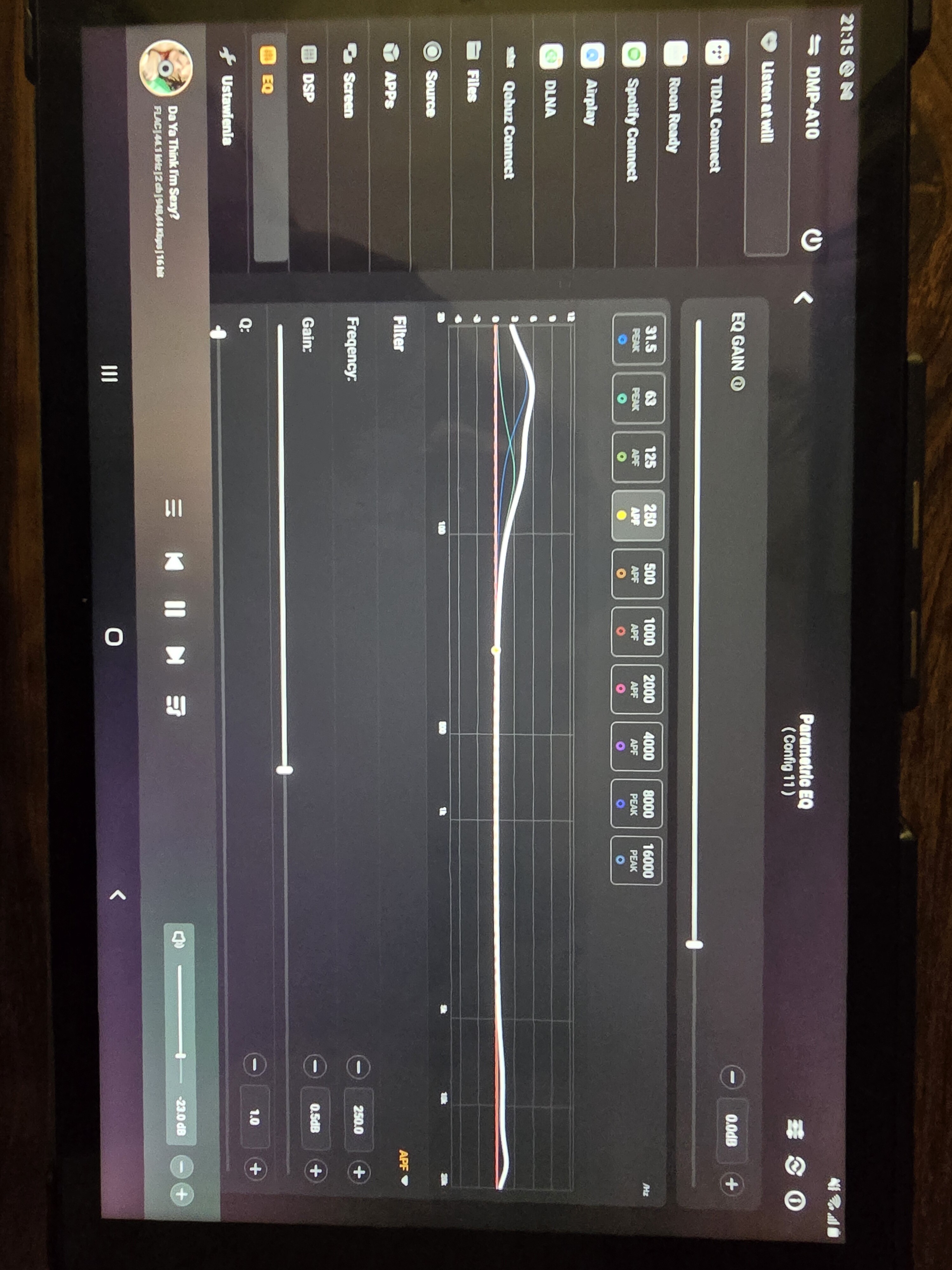
My Chario Aviator Cielo with a small +5dB boost at 30Hz in the DSP integrated with the DMP-A10 do such a good job that a subwoofer isn’t necessary. :hugs:
I’ve been using my PV1 for 11 years (it had a service at the B&W service center after 6 years) and it’s great. I have it set to 40% power because if I gave it 100% power, the windows in the room would shatter. This is a very well-designed model with mica cones, and the concept of an aluminum sphere with opposing drivers eliminates resonance in the bud. :+1:
Thank you for the videos.

:hugs: No, I didn’t misunderstand you.

I meant you should add some bass (woofer) to it, I think you’d like it too. You just have to try it out.

But if you think your main speakers are enough, that’s fine too.

I usually listen at room volume or even a little quieter, and with two subs, I get such a nice, rich sound at low volumes. Although the Lyngdorf does a very good job anyway because, as you said, the volume is only adjusted at the analog output and everything is purely digital before that.

1 Like

Everyone likes something different.
Like in the parable: The priest likes Catherine, and the organist likes money. :innocent: :rofl:

Personally, I listen quietly rather than loudly, because music is like air to me and surrounds me all day long. Unless, of course, my wife steps in. :grimacing:

1 Like

When I get up in the morning, I turn on the music. Then I go to work, and after work, I turn on the music again.

Then I stream something on TV and go back to sleep. That would be my standard routine. Of course, on vacation, I enjoy beautiful nature (water, forests, and meadows).

Oh, and don’t forget parties.

As I typed, I just meant with more bass when you add a subwoofer, and as I listen quietly, it fills your room much more.

Rough comparison:

You listen to your system and with subs, it’s like going to a concert (exaggerated).

Or: Four cylinders versus six or eight cylinders in a car.

This has nothing to do with shaking walls or pictures falling off the wall. My sound transducers and subwoofers are much too big for my room, according to the specified room dimensions. But that’s exactly what fills the room. I’m always talking about moderate volume. If I turned it up, I could make everything shake, and yes, I also love a few power reserves.

As I said, everyone has to find what works best for them, and this is just a little suggestion from me to try out how room-filling it sounds. :ear:t2::sound:

I also listen to music with a subwoofer.
But I always use it with CDs or vinyl. When I used the RS150B, I also used the PV1. The bass from the B&W is excellent, and it’s impressive from 20Hz. :hugs:
But once I recognized the capabilities of the new DMP-A10, I boosted the bass to about 30Hz, with a peak width of 15Hz or so. The effect is quite good, plus the analog physiological correction in the Luxman L-550AXII. Overall, the subwoofer is redundant. So, I understand if you like strong bass, you use two. I also use the amplifier at about 30% power because it’s going all day when I’m working from home.

That’s old enough that it probably wasn’t too good… and EzSet seems to be more about setting levels of speakers in a surround system, not really about room correction.

One thing to remember is that you do not want to just flatten the frequency response. Since you’ve got your speakers because you presumably like their tonal character, you want the target curve to be similar to their natural output, just removing deviations from it and fixing time/phase. Maybe some bump in the bass, but you won’t know until you actually take a look t hat they are actually doing in the room.

1 Like

You’re probably right. Certain experiences create stereotypes. :yawning_face:
I’ll probably try EverSolo Room Correction in the near future. I have to try it.

1 Like

Indeed. I think it is worth trying; and measuring first.

If anything, all 3 woofers in Cielos, being 6.5 inches, have less total surface than a single 12 inch driver in a smallish sub; and you drive them with a 35W or so amp rather than hundreds of watts that a subwoofer has. It’s straight physics that once you get below their roll-off frequency they just can’t play as loud and as clean as even a half-decent sub.

Looking at PV1’s manual though… it seems it only has 8 inch drivers, and looks like only one is actually moving air in the room. And the 500W rating seems to be… wildly optimistic, what with the power input being only 100 or 110 (depending on voltage version) watts. It probably can hit 500W at a momentary peak, and might be able to make windows rattle at 30-40Hz but not really much more. Seems to have been designed mostly for their mini home theater systems with tiny little satellites.

Properly integrated it should make an improvement but I would really consider something a bit larger eventually, if you ever listen to anything that uses a full piano range…

1 Like

Don’t forget that it’s not just the power in Watts that counts. Efficiency (in dB) is equally important.
Only the sum total is the effect. :sunglasses: :nerd_face: and resultant