RS130 Roon Ready certification has been completed

Dear Hi-Fi Rose users

RS130 Roon Ready certification has finally been completed.
We apologize once again for keeping you waiting for a long time.

Roon certification and registration period took longer than expected, so certification completion was delayed.
https://roon.app/ko/partners/142/hifi-rose

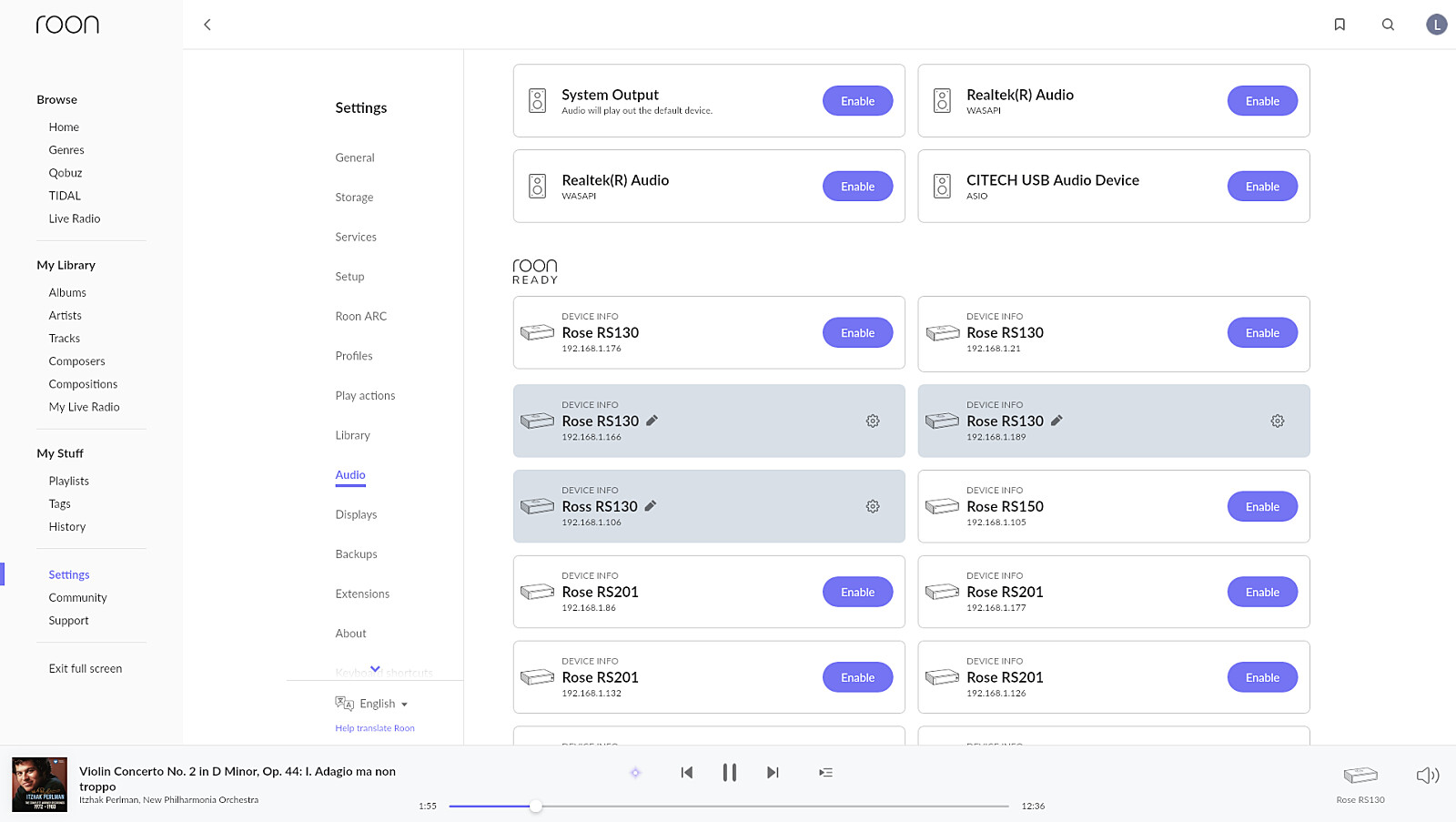
You can use it by registering RS130 in Roon Core–>Settings->Audio->Roon Ready device list.

#1 The Roon Ready feature can only be used if Roon Core is installed on a PC or NAS, or if you have a device that supports Roon Core.
#2. There is no separate menu related to Roon in RS130.
#3. Roon Core must be rebooted for Roon certification to apply and for normal use of RS130’s Roon Ready.

Thank you

3 Likes

Finally!
I’m testing this afternoon!

:pray: :pray: :pray: :pray: :pray: Fully Fonctionnal! :pray: :pray: :pray: :pray: :pray:

This is my first time using a Roon Ready device. Is there a way to upsample the PCM data over to DSD512 (Native in Roon) to the RS130?

Tell Roon to upsample to DSD, although you would need extremely powerful computer to pull it off even with DSD256, let alone 512.

Honestly, there’s also no point to doing it whatsoever…

Hello….I’m new to Roon…is ‘Roon core’ a device, or an app?

Is a Operating System or a App.
2 solutions :

  • RoonCore App should be installed on a Windows PC or a NAS.
  • Roon Core OS obviously also integrating the Core (named R.O.C.K) should be instaled only on a PC exlusively dedicated at is usage, idealy on NUC PC. This solution is the most efficient, especially in terms of speed of database processing, responsiveness and for users who use the DSP, part correction files, etc.

“Roon Core” (or server) is the server part of the Roon system. It is an application you install on a PC (Windows, Mac or Linux) or a sufficiently powerful NAS that manages your local and streaming music and sends audio to audio devices (over a network for Roon Ready devices or through a direct connection from either the Roon Core or a computer or phone running Roon remote.

ROCK – Roon Optimized Core Kit – is a stripped down distribution of Linux that can run on certain Intel NUC mini-PCs (you could hack things to run it on something else, but why bother…) that is, well, optimized for running Roon and Roon only.

Alternatively you can buy a Nucleus server from Roon, but unless you just want a completely hands-free approach it is not a very good value.

I’m going to install and use Roon this afternoon.
Just received my Roon certified NUC with i5 and 16gb ram
Should do fine
One question since I have not any experience with Roon
I have 2 Roon ready devices, Rose RS130 and in my home office an Elac Z3 mobile speaker.
How do I select the device in Roon to play to?
And can I play different music in my living room and in my office?
And when I just want to listen to Rose radio, I have to use the Rose app or can I also listen to radiostations using Roon?

In the Roon app at the bottom of the screen, you’ll see a blue box asking you to select an audio zone to play to. But first, you’ll have to assign your devices under Settings - Audio.

For Roon radio, you’ll have to select stations under Live Radio, or My Life Radio. Then you can play them from Roon from then on.

BTW, Roon had a similar forum to this one. You may find lots of interesting posts on queries by other members.

I am resuming this rather dated post because it seems to me the most suitable for my question:
“What is the minimum Roon setting to use it as a simple library and streaming service management ?”

I have in fact noticed that listening directly to the RS130 + RD160 pair via the Rose Connect sounds better than if it were not managed by the Roon Server.

Maybe mine is just a “psycho-acoustic” belief, but I have listened to many reference songs from my playlists and the feeling of a better sound with the Rose Connect without Roon has been a constant.

I would therefore like to set the Roon Server in a minimal way, without streaming processing and delegate the entire streaming decoding process to the RS130.

At the moment I use a powerful mini-computer as a Roon Server, but some time ago I had done some tests with a Roon Nucleus and the result did not change. Rose Connect without Roon sounds better.

However, the library management and the Roon interface are undeniably better.

I agree with you, although on my system, the difference is very minimal (dedicated server with fiber network card and all fiber network), there are tutorials to optimize Roon and which improve Roon a little (you can find one on the Taiko site). For a significant change, our Rose streamers would have to be compatible with Squeezelite or HQplayer. Indeed, I had a Sotm streamer and as soon as I used these protocols the sound was much better than Roon RAAT. Obviously this is not on the program for Hifi Rose and it must be said that practically no other major brand offers these protocols…

For pure testing I tried to ask DeepSeek what the minimum setting of the Roon Server is to obtain the original signal process reduced to “zero”.
The answer took 30 seconds to process and was astonishing.
Today I will apply the recommendations obtained through DeepSeek and I will report the results in this post.
AI is magic !

I have seen this very conversation on many diff. forums. Many compare the native app to the Roon (for whatever streamer) and say the native is better. I have only done with Eversolo. Did not notice a difference. But I did do the time and go through all the Roon best practices and set it up right. Have others? no idea. I would say I have seen a 50-50 on this on who says Roon is not as good. I have not heard it, but I have spent much time doing my digital path right. Who knows, but there is a large population that agrees so it may have merit.

I will do this comparison when my room is complete. My new RS130 is just burning in now and I have carpet coming next week for room.

My digital path is Modem → EERO Router → wired to LHY-SW6 → Fiber to Melco S100 → fiber to RS-130

System is
RS130
PS Audio MKII DAC via usb
ARC LS28-SE pre → with external Xover JL-Audio CR-1
PS Audio BHK 300’s
Focal Sopra 2.
Rythmik G25HP Sub

1 Like

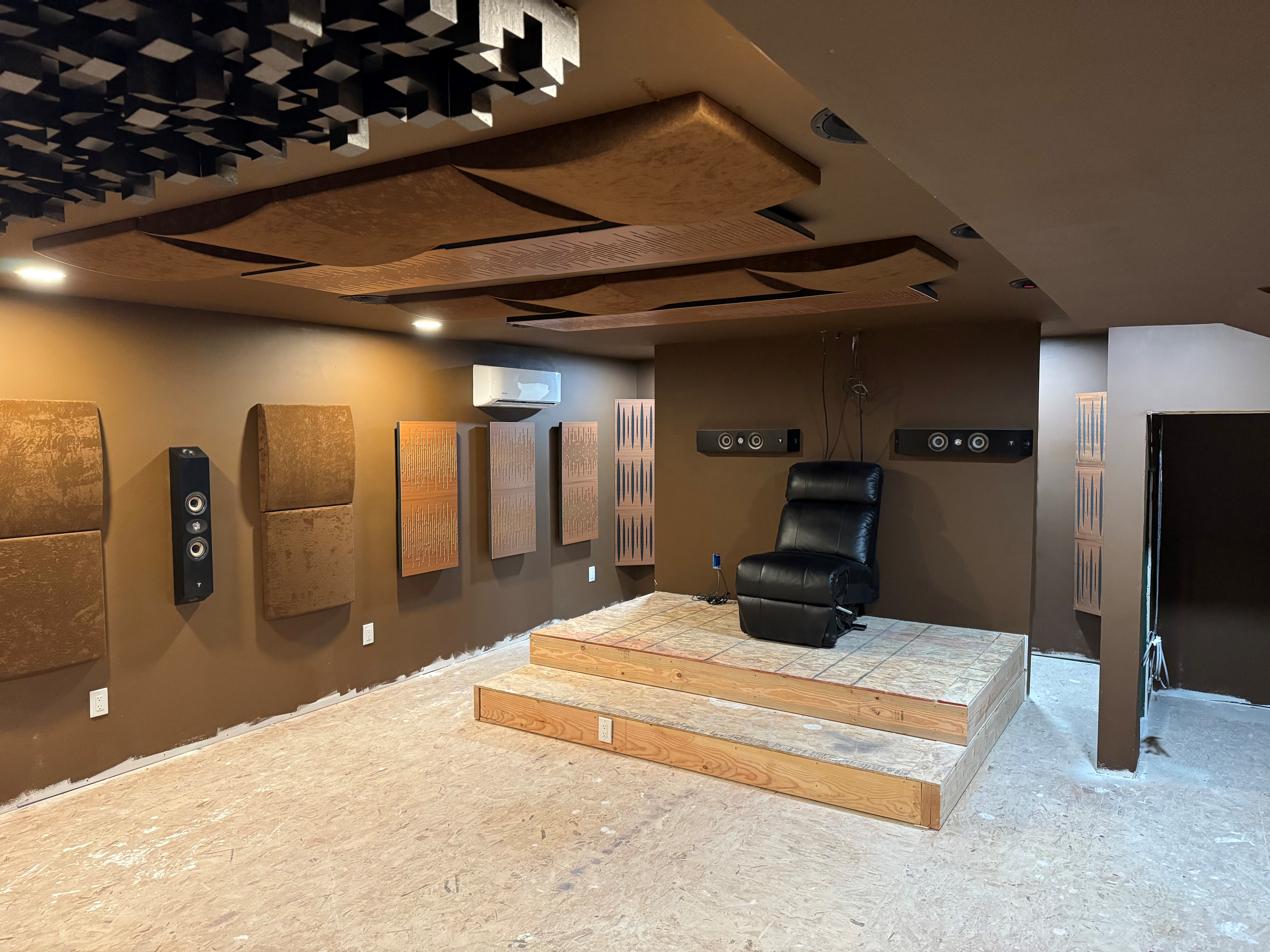
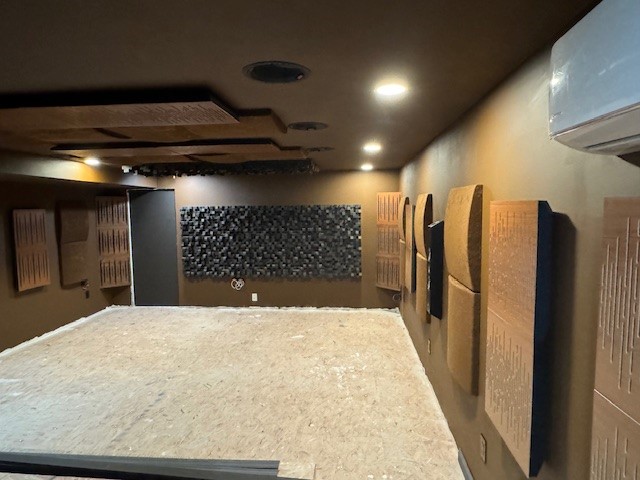
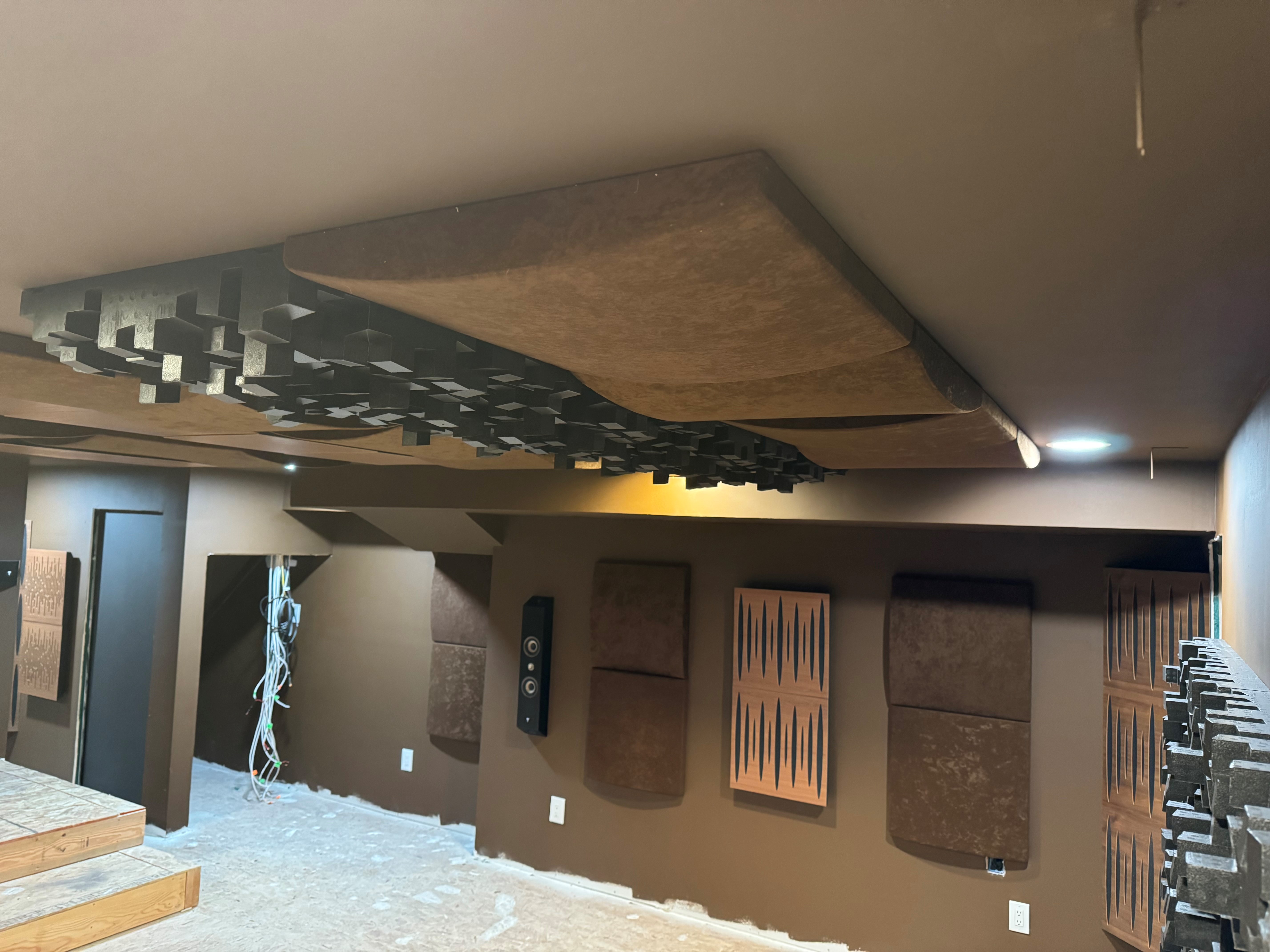
Thanks…only room and Rose (replacing Eversolo) is new. Equipment is from my old house. Moved months ago. taking time to build room. Lots of room treatment too. Its a dual purpose room. Designed for two channel but also has a surround sound. AC Screen in front will hang in front of the diffusors. I have passthrough mode on my two channel pre and xover that lets my 2.1 be shared with two systems.

basement pic 1a

1 Like

That turntable looks killer. Is that a Nacamichi Dragon Tape deck? Old school audiophile.

Room is 16’x25’ but in basement. So height is limited to 7.5’. Rock wool all 5 sides covered by Sonopan and then sheet rock. Should insulate the rest of the house from the sound…I hope.

I know perfectly well that Roon-YES/Roon-NO is a very intense debate among high fidelity enthusiasts, but having the possibility to make comparisons between streaming with and without Roon, I think it is useful to delve deeper and try different system settings .
Then, ultimately, trying to improve the listening by changing the parameters is always positive, especially if the experience is shared with other people, even if they have different opinions.

First of all, the result I have obtained with today’s tests is a “one day of work” and is the best ever.
I had never achieved the current listening quality using Roon, so ultimately I think I have achieved my goal.

  1. The aim
    0.1 To set up the hardware (the PC) to the minimum overload,
    0.2 Its operating system (Windows or Mac OS, Linux etc) runningg as smooth as possible
    0.3 Set the Roon Server to devolve the entire digital processing task to the RS130 and…
    0.4 … use Roon only for music management, with minimal processing, tending to zero

The following settings are the result of research done with DeepSeek AI and consultation of various forums, including this one.
Some of the settings are specific to my system, but generally those not related to PC hardware are all settings applicable to any system.

  1. PC, Hardware (specific, my system)
    1.1. NiPoGi Mini PC (one tens of Roon Titan’s cost)
    1.2. CPU AMD Ryzen 7 - 3750H - clock 3.8 GHz
    1.3. Graphics board AMD Radeon RX Vega 10.DP 4k UHD 60Hz
    1.4. Memory 32 GB Ram
    1.5. Storage internal 512 GB SSD (suggested an external SSD…or NAS )
    1.6. Display used: Panasonic TV 64" HDR 3840 x 2160 px @ 60Hz

  2. PC System settings (specific, my system)
    2.1. OS Windows 11 - 64 bit for CPU x64
    2.2. The system “must” be dedicated only for ROON Server - NO other apps installed !
    2.3. All Windows (or Mac OS) apps disabled, no apps in background (except the OS apps)
    2.4. All notifications OFF
    2.5. All audio settings disabled, audio high resolution output (on PC) disabled
    2.6. All energy saving setting to get the maximum performance and not the maximum energy saving
    2.7. Only one app at menu start: the Roon Server
    2.8. No password at start up (at power on the OS starts and launches the Roon Server)
    2.9. PC WiFi disabled, Ethernet LAN enabled
    2.10. Video chip set to HDR max resolution @ 60Hz
    2.11. Edge OFF, One Drive OFF, Windows auto-update OFF and so on (No app in background)

  3. Local Network Setting (specific, my system)
    3.1 Fiber Optic net @ 10 Gbps, main net branches
    3.2 CAT-8 Copper cables net @ 10 Gbps, secondary branches
    3.3 Very short CAT-8 link between PC LAN port and Audio System switch (LHY SW-6 SFP)
    3.4 First LAN port of the Audio System switch “must” be optically isolated, possibly with SFP module
    3.5 Very short Fiber optic link from Audio System switch and RS130 streamer, via SFP
    3.6 Optional NAS for music storage. I have a Synology 923+, but my library is inside the RS130’s SSD
    3.7. WiFi 7 Mesh enabled for Roon Management in iPhone or iPad (PC communicate via LAN port)

  4. Roon Server Settings
    4.1 Latest OS Roon Server version (in Italy) v2.0 Build 1496
    4.2 No Auto Backup
    4.3 Background Audio Analysis Speed OFF
    4.4 On-Demand Audio Analysis Speed OFF
    4.5 Rose RS130 End Point setting, MQA Decode & Render
    4.6 Rose RS130 End Point setting, Fixed Volume
    4.7 Rose RS130 Re-Synch delay set @ 0 ms
    4.8 Treat MQA as better than CD quality but not as good as lossless Hi-Res content
    4.9 Prefer Edited (Clean) Versions YES
    4.10 Service: Qobuz Hi-Res 24 bit / up to 192 kHz (depends on Qobuz account)
    4.11 Roon Arc OFF (important, Port Forwarding = 0)

  5. Mobile iOS/Android Roon App
    5.1 Installed in iPhone for “quick and temporary” use
    5.2 Installed in iPad mini Gen 6 for “dedicated” ROON use (plus remote mouse and keyboard ctrl)

  6. Reference songs used for comparison Roon-YES / Roon-NO: when my ears perceive these 10 music exactly as expected, then for me the system is well set up
    6.1. Franz Liszt, Les Preludes - Symphonische Dichtung Nr. 3, Deutsche Grammophon, Herbert von Karajan
    6.2. Pink Floyd, The Early Years, Live at Pompei, A Saucerful of Secrets (2016 remix) from min 07:40
    6.3. Genesis, Foxtrot, Supper’s Ready (2007 remix)
    6.4. Tanya Donelly, Moonbeam Monkey (duet)
    6.5. Mike Oldfield, Five Miles Out (2013 remix), Orabidoo
    6.6. Edvard Grieg, Peer Gynt, Morning Mood - Prelude to Act IV, Paavo Jarv
    6.7. Pazza Idea, Patty Pravo, performed by Dorsey Dodd, 6 phases Super Stereo
    6.8. Andreé Brasseur, The Golden Organ, A taste of Tobacco
    6.9. Zucchero Fornaciari, B.B. King Duet, Dune Mosse, Hey Man - Sing a Song (album Version)
    6.10. Yes, Live in Montreux, And You And I,

Result: Objective Achieved !
Minimal differences, imperceptible and secondary.
NO evident differences in using the RS130 Rose Connect alone or the Roon Server
For me this is the best result ever achieved before.
From now on I will use Roon for library management !

A technical note.
The protocol. of audio communication from Roon to the RS130 is the RAAT (Roon Advanced Audio Transport).
We, as users, cannot intervene or interact with the protocol as it is standardised for the exchange of data with the Roon Ready devices, but it would be nice if one day they will offer us the possibility of synchronising the Roon clock and the End Point clock with a clean 10 MHz external signal.

Giuseppe Biondo

3 Likes

Ah, yes, synchronizing a by definition asynchronous protocol. That makes lots of audiophile sense!

Of course anyone who does not have a recording studio but invests in an external clock is feeble-minded anyway…

Yes, that’s the weak aspect of RAAT

Wrong:
RAAT was designed to interface a multitude of devices, not necessarily expensive, therefore the asynchronism was chosen to reduce the costs of the End Points.
But we have a super End Point, the RS130 is far from cheap and for this reason it “deserves” a synchronous clock, decidedly more precise and faster which also reduces latencies and further processes which are essential in asynchronous.

At the moment, with Roon, we must obey the imposed RAAT protocol