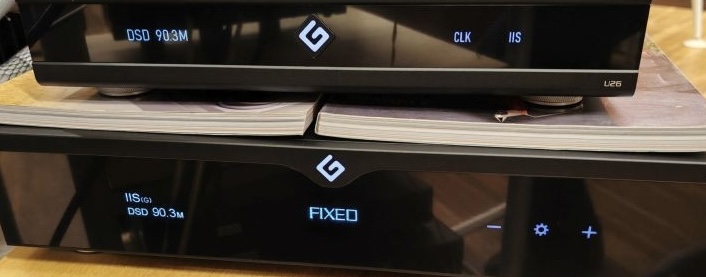
Suggest Hifi rose RS151 add upsample to DSD2048 features

Dear HiFi Rose Support Team,

I am a dedicated user of the HiFi Rose RS151
and I am writing to suggest a feature that would further elevate the device’s position as a market leader in high-end audio streaming.

I would like to request the addition of upsampling to DSD 2048 in a future firmware update, adding DSD 2048 upsampling would bring several key benefits to the listening experience:

I have try to use NAA UPSAMPLE to DSD 2048 with other dac and the sound blew me away.

  • Exceptional Sound Quality: Higher upsampling rates can significantly reduce digital noise and provide a more refined, high-resolution output that truly utilizes the potential of the high-end DAC architecture.

  • Analogue-like “Texture” and Warmth: Many audiophiles seek that specific “musical taste” or “flavor.” Upsampling to DSD 2048 often results in a smoother, more organic, and analogue-like sound signature that many of us deeply appreciate.

  • Future-Proofing: As the industry moves toward higher sampling rates, offering DSD 2048 would make the RS151 one of the most technologically advanced streamers available today.

I believe this update would be a game-changer for the HiFi Rose RS151 and boost up the sales, create more owners and further enhance the “Absolute Pure Sound” reputation of your products.

Thank you for your time and for continuously improving such a fantastic product. I look forward to hearing your thoughts on this suggestion.

Best regards,
1 Like

Apart from being way above the capabilities of the CPU used in any current Rose device, despite of all the FUD that Jussie spreads, no, upsampling to SDS2048 (or DSD64 for that matter) does not provide any sonic benefits.

Using some fancy filter with a fancy-sounding pseudo-scientific name can alter the sound, but then you are not listening to the original recording as intended. And Rose came out saying that they are not even planning to add anything that does improve the sound quality, like PEQ or DRC, anyway.

I don’t think that would make much sense for HiFi ROSE. And even if it were technically feasible, any difference in sound would likely be beyond the limits of human hearing, wouldn’t it?
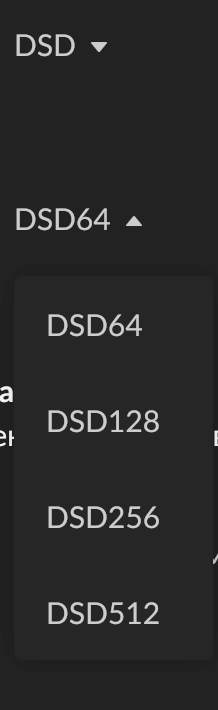
Screenshot 2026-03-22 at 18.28.38
You could experiment with the MUSE tab in Roon and easily upsample to DSD512 — there are plenty of additional settings there to play with. Maybe that could bring you some improvement, at least to some extent.

1 Like

Really, “beyond the limits of human hearing” is reached at 48/24. DSD, ever since its inception when Sony/POhilips’ patents on CDs expired, has always been in selling you the same stuff a few more times, just in a new shiny format.

Now add Jussie wanting to sell his product (which, mind you, is technically an extremely impressive piece of work, and can even be used for something useful; not that the same could not be achieved with other, often free, tools), and DAC manufacturers needing to move new products that do not offer any real improvement over commodity off-the-shelf stuff, and the amount of FUD and snake oil being thrown around is quite incredible.

3 Likes

Nowadays technology make huge impact and improvements on the SQ.

Once you tried DSD2048 , you will found that’s different class !

Cheer mate !

IMG_4320

Old friend, technologies for improving sound have long since hit a ceiling, while the technologies for extracting money from audiophiles’ wallets keep growing like cancer cells, poisoning their minds more and more :slight_smile:

3 Likes

It’s definitely in a different class as far as extracting the money from the gullible goes. As for the sound quality, it has long been shown that past DSD128 or so increasing the frequency is only detrimental. Not that any DSD had any benefit (except to Sony, and outfits like NativeDSD running masters originally recorded in PCM96 through an upsampler and selling them at a good markup) over PCM to begin with.

3 Likes

You’re so right…:clap:t2: :clap:t2: :clap:t2: :+1:t2:

:v:t2:

3 Likes

I think so too. But you can’t stop people called crazy from paying for “gold cables made of space dust.” :rofl:
And most of them are deaf to frequencies above 14 kHz anyway. :sunglasses:

3 Likes

“Money makes the world go round”…

1 Like

You’re not wrong about the marketing madness in this industry, mate! But honestly, the jump to DSD2048 felt like a technical breakthrough to my ears, not just hype. At the end of the day, if the music sounds more ‘alive,’ I’m a happy man. Cheers for the perspective!

If Hifi rose adding this features, I don’t see any disadvantages , the upside in sound quality is much greater than any downside to the wallet. The way DSD2048 handles micro-details feels like a genuine breakthrough. For me, that extra layer of ‘soul’ in the music makes it all worth it!

cheers mate :slight_smile:

Except that there is no upside to sound quality. If anything, it is worse.

And of course you had actually compared them properly. Oh, wait, you did not!

But sure, instead of doing something useful, like fixing all the bugs, let’s have Rose waste time trying to get a tiny phone CPU do DSD2048 upsampling (which it most likely can’t do anyway) for that one DAC that actually supports it, because its manufacturer can’t build anything actually competitive and has to resort to FUD.

Well, the reason I’m an advocate is because I’ve done the comparison. To suggest it sounds ‘worse’ implies a misunderstanding of how higher-order modulators reduce quantization noise in the audible band. While software upsampling is CPU intensive, the trade-off—using a resource-rich environment to run complex algorithms that a standard DAC chip simply can’t—is exactly why the sound gains that ‘alive’ quality. Bug fixes are important, but for a high-end brand like Rose, pushing the ceiling of sound quality is equally essential to staying competitive.

Cheer mates :slight_smile:

1 Like

So you have tried them, on the same DAC, compared them at exactly the same volume level, compared upsampled and simply filtered versions (it’s filters that might change the sound; of course once you run it through one of those modulators you aren’t playing the original recording as intended, but whatever…) and did it without knowing which one was playing? Right… Color me skeptical.

There are mathematical proofs (empirical ones, too) that higher rate DSD (and even higher rate PCM) increases it, but what do those mathematicians know!

This is just a verbatim regurgitation of Juicy’s FUD. ASICs in modern DACs are more than capable of doing any kind of upsampling necessary to accurately reproduce the signal. It’s all the fancy-looking, very science-y filters that audiophiles select because they do not understand the math behind them that are a “problem.” Alas, it is a problem only inasmuch as it lets Juicy claim that “see, you can’t run this in a DAC” regardless of whether it has no audible effect at all (vast majority of them) or play something quite different from what is recorded (the ones that do sound different).

You simply can’t gain any quality of something that is not in the original recording. If you like the sound with some extra distortion thrown in, that’s a valid preference, but there are easier ways to do that.

Rose is not a “high-end” brand and demonstrably is not interested in sound quality beyond marketing copy about completely irrelevant to SQ gimmicks (SFPs, external clocks, etc.) that audiophiles are willing to waste money on. Which, ironically, means that they might have been interested in this, had it been technically feasible (it’s unlikely to be unless you manage to fit a high-end Nvidia card inside of it) but even then it does not make commercial sense, just for supporting that one obscure DAC that can actually process DSD2048.

You’re right that we can’t ‘add’ what wasn’t recorded, but you’re missing the point of reconstruction . The filters inside a standard DAC ASIC are limited by hardware constraints—they use short taps and simplified math to stay within power and thermal limits. By upsampling to DSD2048 externally, we aren’t adding distortion; using superior processing power to run complex, high-tap filters that a DAC chip simply can’t handle. This allows for a much cleaner removal of imaging artifacts and pushes the ‘noise’ he’s worried about far into the MHz range, allowing for a much more transparent analog stage. It’s about precision of conversion , not adding fake data.

Skepticism is healthy, but dismissing direct experience as purely ‘placebo’ is just as unscientific. The difference in a high-resolution system isn’t always about a frequency response change; it’s about the time-domain accuracy and the reduction of pre-ringing. While ‘mathematical proofs’ show ultrasonic noise increases, they often ignore that our DACs’ analog filters can handle that much more gracefully than digital filters can handle Aliasing at lower rates. I trust my ears because the spatial depth and ‘effortlessness’ of DSD2048 on a capable system is a repeatable observation, not a one-time guess

Whether you consider Rose ‘high-end’ or not, the demand for high-rate processing is driven by users who want to bypass the internal limitations of their hardware. Adding DSD2048 support isn’t a ‘gimmick’—it’s about giving the user the freedom to use the most advanced modulators available today. If a device has the headroom to offer it, why settle for the ‘good enough’ standard of a generic chip? Innovation in audio has always been about pushing boundaries that skeptics called ‘irrelevant’ at the time.

I appreciate the skepticism, but there’s a fundamental misunderstanding here. Upsampling to DSD2048 isn’t about ‘creating’ information; it’s about optimal reconstruction.

Standard DAC ASICs are computationally limited; they use compromise-heavy filters because they have to fit on a tiny silicon die. By offloading that task to a more powerful processor, we can use mathematically superior filters that significantly improve time-domain performance and minimize ringing. You mentioned distortion, but properly implemented high-order modulators actually push quantization noise so far out of the audible band that the analog output becomes much purer.

It’s not about ‘loving distortion’—it’s about removing the digital artifacts that lower-rate processing leaves behind. Whether Rose implements it or not, the trend toward high-rate DSD is a response to the clear sonic benefits that many of us, through careful listening, have found to be very real.

Cheers Mates :slight_smile:

1 Like

Yes, that’s exactly what Jussie wants you to believe. Unfortunately, the only proof that he offers is “trust me bro” and “well, maybe if you are not a sonar operator you won’t hear it.”

An “ideal” conversion can be done, with a little bit of patience, with paper and pencil on a sheet of graph paper. It can be then compared with the actual output of a DAC. Which has been, and is being done quite regularly. Output of a cheapest, cheesiest modern DAC (unless it was designed by such luminaries as Uncle Paul, of course) is close to the “ideal” output within margin some orders of magnitude below anything that could be heard by a mutant radioactive bat. Results of Jussie’s upsampling are either the same (within that margin), just with more high-frequency noise that may or may not create problems downstream, or they are farther from the ideal, because a fancy filter has been selected that munbgles the data. Sometimes audibly.

Either you can show where that “imprecise” conversion shows, at anything approaching audible levels, in the output of any decent DAC doing the thing it has been optimized to do or you can’t. Interestingly (albeit not unexpectedly) Jussie can’t.

Unlike DACs, ears (yours, mine, Uncle Joe’s) are provably shown to be not trustworthy. Especially when one starts talking about either completely meaningless (“effortlessness”) or in no way affected by the DAC (“spatial depth”) ju-ju.

Yes. Same users who demand $10K power cables, use green markers on their CDs, and hear differences between brands of optical fiber. This is the weakest argument one could make.

Which Rose does not, just like a phone (a few cyears old one at that) does not. HQPlayer’s conversions (even if they had any benefit) use as much power as ythe rest of your playback chain, if not more.

Of course, on purpose. They do one thing well. It has not been demonstrated that doing “some other thing” would be of benefit. And as long as your goal is the accurate reproduction of the recorded signal, there is no reason for them to do anything but one correct thing right for the downstream converter, which they do.

If only anyone could show where those artifacts are… Somehow anytime you ask Jussie, he can’t and starts swearing.

Yup. Just like we have people here who have found the trend towards $500 fuses to present clear sonic benefits. At least you can actually fit a new fuse in a Rose.

MusicLover,

Technically accurate and very well said.

StandardModel

1 Like

I appreciate the debate, but comparing a dynamic audio signal to a ‘graph paper’ static proof is oversimplifying the complexity of Digital-to-Analog Reconstruction.

  1. The ‘Ideal’ vs. Reality: While the math of a perfect sinc filter is clear, no DAC chip can implement it perfectly in real-time due to hardware constraints. Standard ASICs use short filters that result in pre-ringing and time-domain smearing. By upsampling to DSD2048, we aren’t changing the ‘data’; we are shifting the filtering burden to a more powerful environment. This allows for significantly longer ‘taps’ and more precise impulse responses. It’s not about frequency response; it’s about timing accuracy, which the human ear is remarkably sensitive to.

  2. Noise vs. Resolution:You mention high-frequency noise. The beauty of DSD2048 is that it pushes quantization noise into the multi-MHz range, far beyond the reach of any audible interference or even the sensitivity of downstream analog stages. This provides a much ‘cleaner’ canvas for the analog reconstruction filter, leading to what I described as ‘effortlessness’—a term used by many to describe the lack of digital glare.

  3. The ‘Placebo’ Argument: Dismissing every advancement as a ‘$500 fuse’ or ‘green marker’ is a classic straw man. One is a passive accessory with no scientific basis; the other is a computational upgrade involving complex modulators and signal processing. One is superstition; the other is engineering choice.

  4. Hardware Feasibility: You’re right that Hifi Rose might need a hardware refresh to handle DSD2048 natively. But the point remains: a high-end streamer’s job is to provide the best possible signal to the DAC. If the industry is moving toward offloading heavy lifting to powerful CPUs/FPGA to bypass cheap internal DAC filters, then Rose ignoring that trend is a missed opportunity for the enthusiast.

We can agree to disagree on the value of these nuances, but dismissing the audible impact of filter topologies as ‘ju-ju’ ignores decades of research by companies like dCS, Chord, and others who have proven that how we handle the digital-to-analog transition is everything.

Cheers Mate :slight_smile:

Of course. And that isn’t even related to filters you’re using.

So do longer filters, the question is in differences in audibility – something that would need to be demonstrated rather than hand-waved. “Trust me bro” is not a proof.

So does any well-implemented filter for PCM 44.1/106 (again, unless it is something Uncle Paul made by hand). Jussie loves talking about some theoretical advantages (even when measurements show an entirely different noise picture) but showing audible differences? Crickets.

Nope. While HQPlayer is not snake oil in the same sense as a fuse – it actually does do something and is a very impressive piece of programming – there is just as much of a scientific basis to believe that what it does (assuming that we are not applying filters that actively change what is being reproduced) makes for any audible difference as there is for a “directional fuse” to change the sound. If there were somebody would have managed to demonstrate it.

Both are engineering choices. Absent any evidence, both are based on a superstition.

Streamer’s job (since Rose refuses to add even PEQ, let alone DRC or something else useful) is to provide a bit-perfect signal to the DAC (let’s disregard conversions for compatibility reasons for a moment). DAC’s job is to convert it to analog signal as close to the ideal as possible. Try as he might, Sygnalist has not provided any solid evidence that running data through their software does anything to improve the latter.

Chord has always been about Rob Watts claiming to be able to hear what is equivalent to a mosquito farting on the dark side of the Moon and his product range from mediocre to as good as an off the shelf ESS DAC but for 200 times the price. dCS used to make excellent DACs, back when most off the shelf ones were not any good. That was something like 20 years ago. Now they just build good-looking, solid, very expensive jewelry (with no DSD2048 in sight) that is audibly indistinguishable from a cell phone.

Sure, one could take some NOS, filterless DAC that would require something like HQPlayer because otherwise it sounds like crap. But that’s because a NOS filterless DAC is crap by design.

Let me ask once again. Can you tell a Red Book recording, played as is through a decent DAC, from same recording upsampled to DSD4096 played through the same DAC, at exactly the same volume, without using filters that audibly affect frequency response, without peeking?