Upgrading to RS151

"What world-class technology? Listen to decent players like the Aurender A15, A20, Lumin P1, X1 (and soon X2), Esoterica N01, or something from DCS, like the Rossini, not to mention the Vivaldi transport and DAC combo.

While dCS at least has some proprietary “technology” (which, as can easily be proven, is no better than others), if you think the Aurender or Lumin offer any technology that the EverSolo or Wiim don’t, you’re the perfect little consumer to sell anything to, but you have no idea what you’re talking about." -----

At this point, the discussion has reached the level of how the moon affects the transmission quality of “diamond cables.” Discussing on a forum about the listening quality of devices costing as much as a decent car is completely frivolous and pointless.

How many normal audiophiles can use such devices daily??? Whether it’s 1% or 4% of the population, it will always be an extreme margin. Extreme margins are always ignored. This is particularly favored by digital sound processing technology.

Furthermore, beyond a certain level of electronics technology, obtaining additional sound nuances becomes so expensive that it becomes

ABSURD. :rofl:

1 Like

That’s why I believe that Rose with its RS150B and RS151 streamers, or EverSolo with the DMP-A10, thanks to the use of very good components and their excellent implementation, have effectively achieved world-class sound quality. Sound quality acceptable to a wide range of audiophiles and at an acceptable price. How many audiophiles can listen to systems costing $500,000 every day? Maybe 1% to 3%, a mere margin of the population. Such margins are always ignored in digital audio processing technology.

Furthermore, I have a rhetorical question: “Do people who buy so-called high-end systems for $500,000 even hear these nuances and artifacts?” Most don’t. They buy these components just for the show. :joy:

2 Likes

That’s exactly what it is. Veblen goods. People buy them because they are expensive. Period. Full stop.There’s nothing else there.

Really, a lot of those “high-end” devices are designed so badly that they make a hash of any subtle nuances anyway. But people who buy them (and can afford them) are in the same demographic as Stereophile reviewers – they haven’t heard anything about 12KHz in decades, so it all sounds good to them.

2 Likes

I think the same. :100:
Best regards.

Boris…another honest and “well-known” statement.

Many people think they can compensate for their aging hearing with expensive technology. Unfortunately, their hearing simply doesn’t cooperate anymore. Differences in sound are still perceived because there are thousands of hi-fi components, each tuned differently.

Boris, you know we’re both the same age.

I repeat:

I had grandfathered rights until age 50 with the medical examination for my truck driver’s license. Now, at 50, I have to undergo a medical examination every five years.

Next year, my next legally mandated check-up is due.

During my first medical examination (for my truck driver’s license), I asked my company doctor if she could show me the diagram from the hearing test. I was negatively surprised to learn that four years ago I could only hear up to 14,600 Hz. You sit in an anechoic chamber (sealed with special glass, you wear headphones, and you have to press a button when you hear sounds. Of course, the entire frequency spectrum is tested…from very low to very high).

Well, I’m curious to see what the test results are next year! I hope my hearing and eyesight are still good enough to keep my truck driver’s license.

Otherwise, that’s it…that would be really bad for me.

:v:t2:

1 Like

Yup. The more one keeps talking about hearing some subtle differences that only present themselves on “revealing systems” the better the chance that they do not even hear anything coming from their tweeters.

1 Like

Bonte,

I’m 83 and you just tested at my limit 14,000.
Tweeters are wasted on me.

StandardModel

1 Like

You still have good hearing for your age. Hats off to you!

Like I said, a lot also depends on how you’ve managed your work life.

I’ve always taken care of my hearing. But as a teenager, I wasn’t so careful about protecting my hearing (discos, loud motorcycles, etc.).

Besides, I worked for many years as a metalworker in agricultural workshops, with forges and, of course, loud machines and tools. The job wasn’t secure for me anymore, so in the early 90s I went back to school for two years and learned my dream trade, becoming a carpenter. But milling machines and panel saws, etc., also produce high frequencies, so of course, you should always wear hearing protection.

What I’m trying to say is that how you earn a living also affects your hearing. I’d say someone who just sits at a desk probably has better hearing. But that’s just a comparison. Everyone is unique, and even an office worker might have worse hearing than me. So many factors play a role…

That’s why!

Don’t listen to your devices… enjoy your music! We need sounds (nature) or Music, because it’s good for us humans.

1 Like

I was a desk jockey.

1 Like

Here we come to the heart of the matter. I may offend some people. But the fact is, most audiophiles have poor hearing above 14 kHz, or no hearing at all. Hence, in many test descriptions, they mainly rave about the “midrange” of what they still hear normally. They admire the amplification of tubes, which hum and generate harmonic distortion, but listeners don’t hear most of this distortion at all. And that’s a small step towards the so-called High End, where many spend huge amounts of money on virtual tube effects. :joy: :cowboy_hat_face:

I myself am a proponent of super-clean Class A using Si or GaAs transistors. That’s why I prefer transistor technology. Analog amplifiers from Japan, Luxman, and Accuphase are the best in the world. And they transmit audio signals, essentially without any distortion, in a linear characteristic with enormous current efficiency. Because I built such tube amplifiers in my youth, and now, with the wonderful Si technologies available, I now only recommend transistor ones.

And one more thing: please implement 24-bit FLAC file decoding using tubes. :rofl: :joy:

Yup. And musicians, some people here refer to as an authority, are worst of all. Both deaf due to being on stage with an instrument blowing in their ear all the time, and because they know how things really sound, so they adjust easily to even very inaccurate systems…

Unless one wants the tube distortion, either a tube or a solid state amp can be a “straight wire with gain” if properly designed. These days even class D amps, if properly designed (that is, almost none of those silly GaN jobs) are just as good, without doubling as room heaters. Although classics like Accuphase or McIntosh do look nice!

“If someone doesn’t want tube distortion, both a tube and a transistor amplifier can be a ‘simple wire with amplification’ if designed properly.” —

I disagree with you here. A tube is always more difficult to eliminate interference, microphonics, or frequency-dependent induction variations in isolation transformers. Furthermore, a tube wears out quickly, and with it, constantly changes its operating parameters. Yes, these limitations can be eliminated by design. But tubes will never match the perfect purity of a ‘wire with amplification’ in the transistor version of Class A. For me, Class D is a substitute for processing in audio. Because first we fight the harmonic corrections of advanced filters when decoding from digital to analog in streaming, and then, at our own request, we generate them by converting analog sound into Class D pulses. …

Beauty is always in simplicity, and this also applies to audio technology in terms of minimizing the analog/digital transformation. This is my opinion, and you may disagree. In my listening systems, I try to incorporate the entire digital/analog conversion into a single module, whether it’s a streamer or a CD player, and eliminate all harmonics and other interference there. And then, just don’t disturb the “class A” wire amplification and the speakers. That’s the essence of simplicity. :smile: and perfect sound
Best regards.

True, and in 2025 (or in 1975 either, really) there is no point in designing something with tubes, other than selling to half-deaf audiophiles. But at least while the tubes are within spec, it’s quite possible (McIntosh, Carver, and others did do that) to design a tube amp that is perfectly linear and non-distorting within audible range. One can do it, there’s just little point in it, rather like making a very accurate mechanical watch – one can use it out of admiration of the workmanship and mechanical design, but a $15 quartz is still just as good or better…

While strictly speaking true, practically speaking, a good class D amp provides a “straight wire” amplification beyond anything audible to humans, while being more efficient. It’s sort of like R2R DACs – audiophiles think they understand how a resistor ladder works (well, they don’t, really, being audiophiles, but the idea is simpler) and that makes them think it is better than a delta-sigma kind, even though all that R2R gives you is being possibly almost as good as a delta-sigma for significantly more money.

I generally agree – no point in having multiple boxes when a single one does the job just as well. I just don’t think you’d actually hear any noticeable difference between well-made A and D amplification.

“I simply don’t think you can hear any noticeable difference between a well-made A and D amplifier.”

–For most people, it’s certainly difficult to tell the difference. However, I am a supporter of class A using very good transistors / i.e. those with a wide range of linear characteristics /. Moreover, I am full of admiration for the knowledge and craftsmanship of the engineers at Luxman.

That’s a valid reason for preferring e.g. a Luxman gear. I like IWC watches, too, there’s an incredible amount of craftmanship in them. I would not pretend that they are better as time-telling devices than a Casio though.

https://www.luxman.com/company/
They probably never produced watches. :thought_balloon:

Guess they stick to what they know…

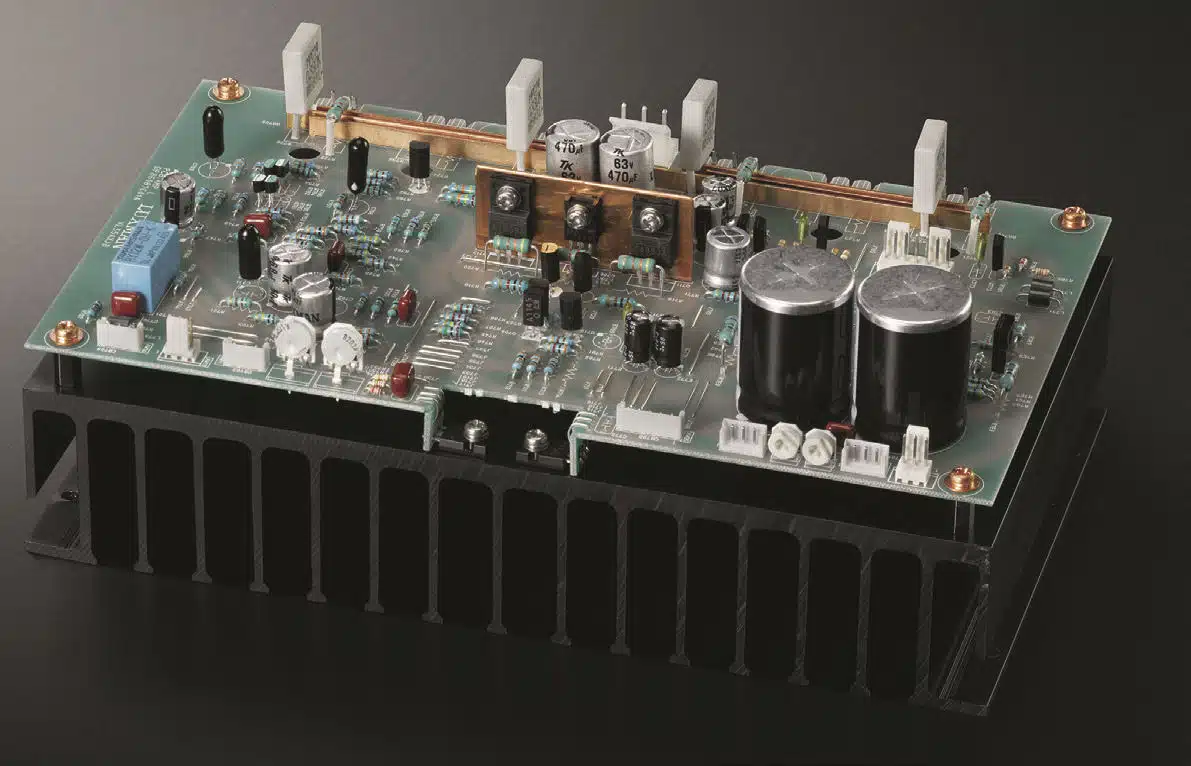
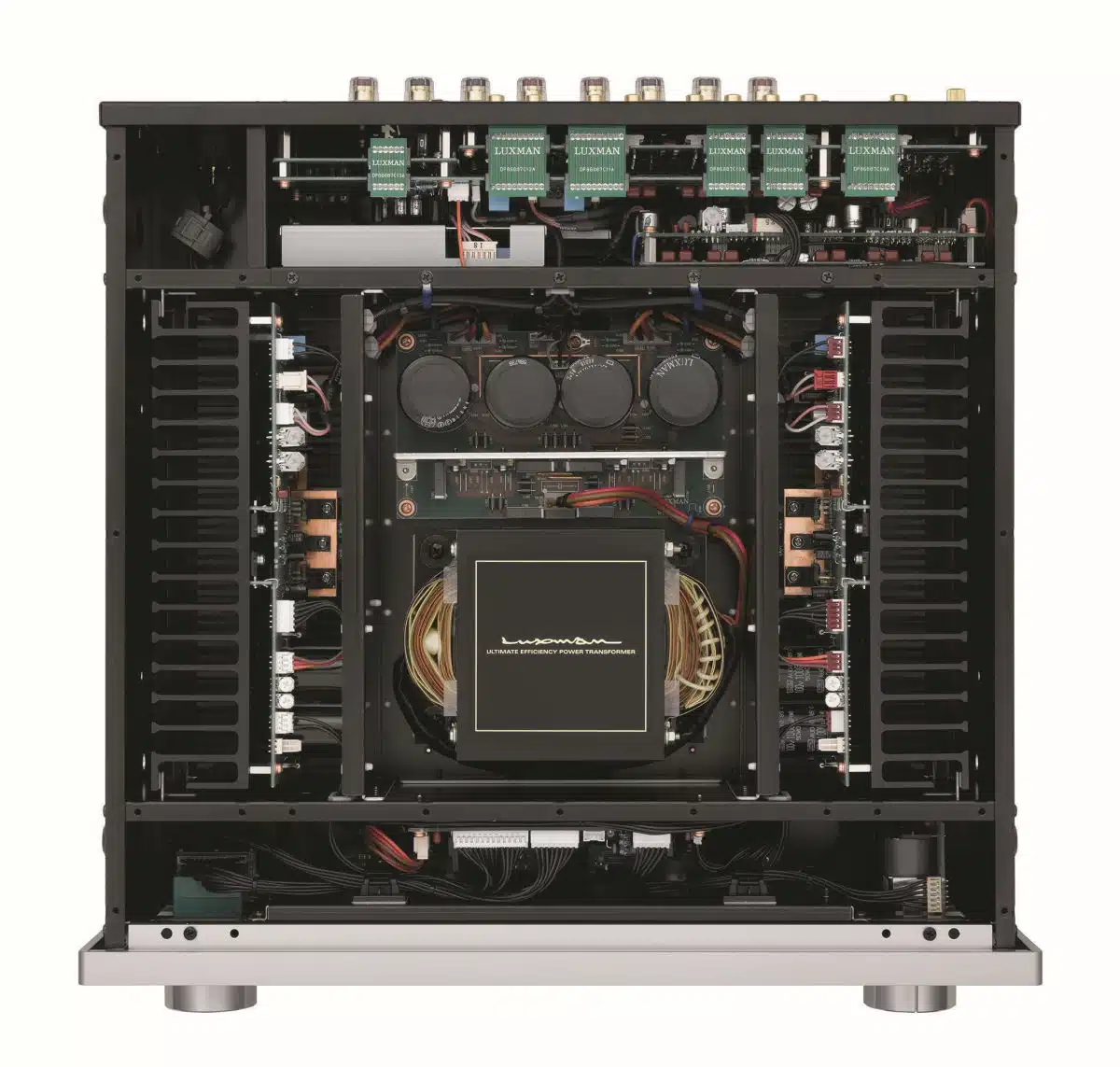
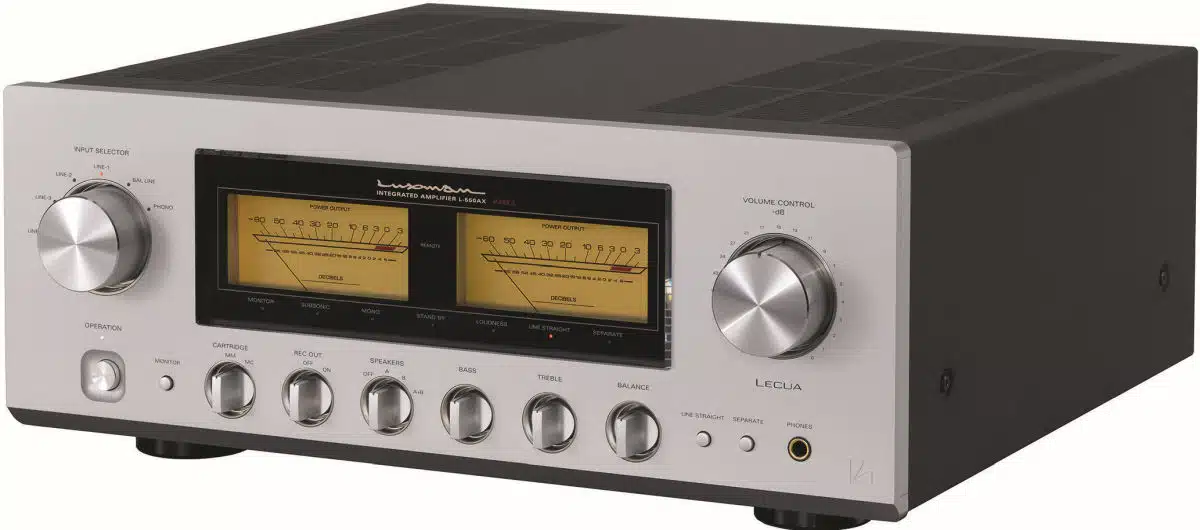
look and admire the craftsmanship of the “watchmaker” Luxman060-069_Hifi_7-8_2020-001.jpg

060-069_Hifi_7-8_2020-009.jpg

:wave: :100: :+1:

1 Like