I’d be fine with that—I’ll just see if I can get something like that here in the 51st state (Germany) of the USA.

I’d be fine with that—I’ll just see if I can get something like that here in the 51st state (Germany) of the USA.
Sorry to disappoint you Bonte, but Germany is 53rd at best, behind Canada and Greenland!
This post was flagged by the community and is temporarily hidden.
This post was flagged by the community and is temporarily hidden.
I even had a PowerPlant. As any BS Audio product, no matter what garbage you’d feed it, it would product even more garbage on the output. That’s what happens when products are designed by marketing and the company does not employ any engineers.
This post was flagged by the community and is temporarily hidden.
I’ve been using a Power Plant P12 for a few years now, and it works great. It produces a pure 230V sine wave and filters out all the interference and debris from the power plant. And sometimes the power plant delivers 3% interference superimposed on a square wave instead of a sine wave. You need to know this, not just spout nonsense and write down whatever comes to your mind in the morning.
 … there’s nothing to object to there.
But if I go by the year of admission, we are actually the 48th state. We have been an occupied territory since '45. Starting in '59, Alaska and Hawaii joined.
Although—in my view—the Russians made a mistake back then by practically giving Alaska away to the Americans for next to nothing.

And that brings me to the point I’m truly interested in—without trying to dismiss everything as nonsense!
Is a difference like this—truly “night and day”—actually audible when using audio equipment? Do the “veils” really lift?
And what about the power filters built into well-engineered Hi-Fi components? (I prefer not to use the term “High End.”)
Since I’m not one to blindly accept things on faith, I simply cannot fathom why a company like HiFi Rose—which sells units costing around $5,000–$6,000 and markets them as top-tier products—would install such poor internal power filtering that these supposedly “High End” devices end up sounding like cheap stereo systems, forcing the customer to spend yet more money on an external power regenerator or conditioner.
I just can’t wrap my head around it.
“I just can’t understand it.” 
There’s no point in crying about it. Either buy a different device or solve the problem in a different way. For example, on sunny days, you connect to a PV inverter. The key is to isolate yourself from the waste from the power plant system.


No, I’m not doing that.
For my budget system, the internal power filters are sufficient. 
Have a great weekend… 
Hi Tom,
if you are seriously interested, I can warmly recommend contacting Herr Christian Lorenz from Pastetten.
He is an authorised Supra Cables dealer and also offers their products for testing. He has already sent me quite a few audiophile toys for listening tests, and he is a very pleasant Bavarian gentleman to deal with.
He also has a really funny website. You can read it while holding your stomach, because the material is written with a very subtle sense of humour and somehow pulls you into all those tests.
Just write to him. You won’t regret it. 
Thanks, VIK. At first, I intended to buy one in Denmark yesterday—it would have cost around €60 there. At German Hi-Fi retailers, however, the price climbs to €80.
I have just one problem.
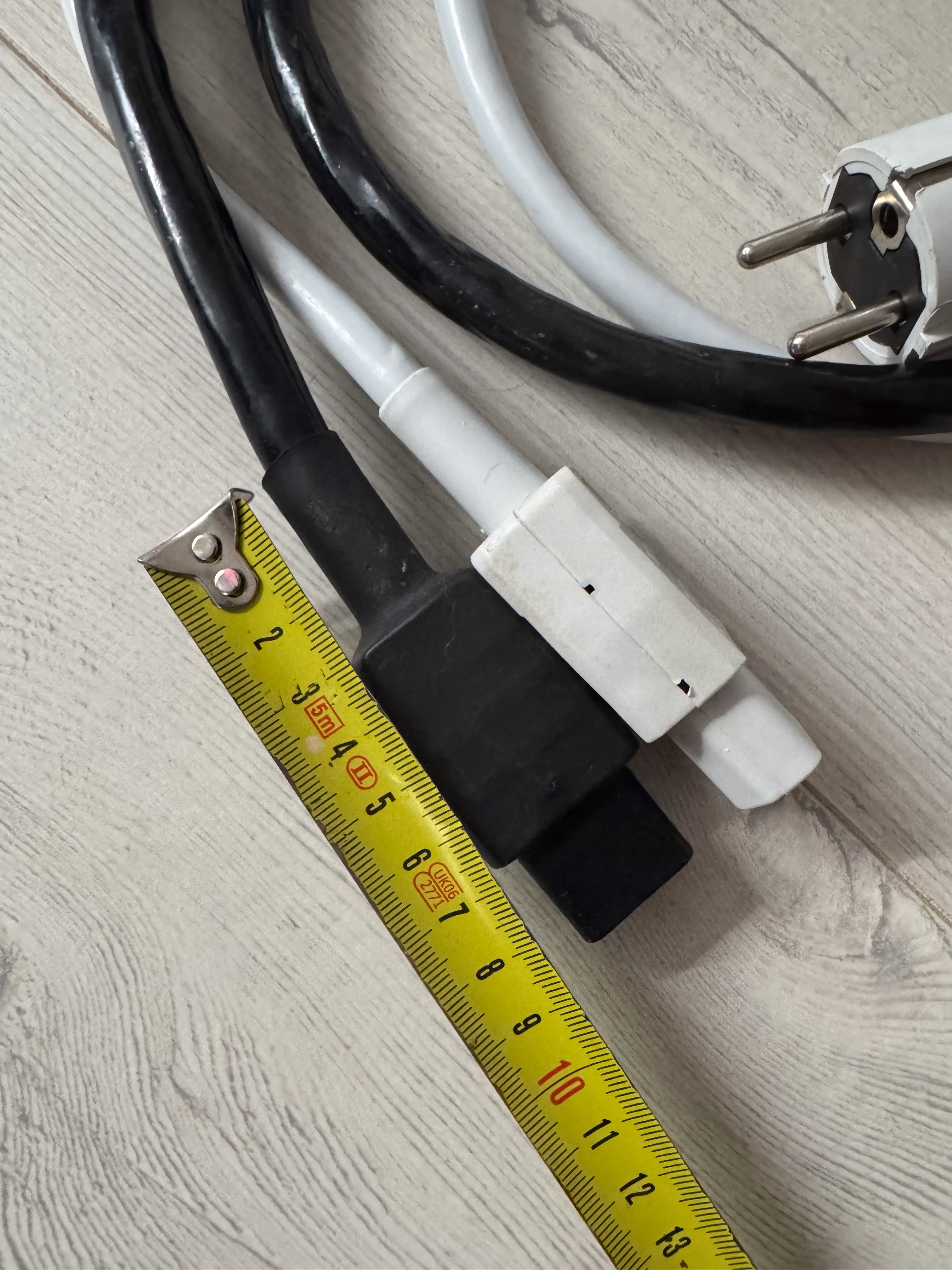
I have very little clearance behind the unit against the wall. If the plug inserted into the device is too long, it hits the wall; furthermore, I cannot move the unit any further forward, as it would then protrude beyond the edge of the shelf—which looks absolutely terrible. This wouldn’t be an issue with the Rose 520, as it is not as deep as the 3400. The only real solution I would consider trying is to purchase the cable without a pre-attached plug and terminate it myself—specifically using a right-angle plug for the rear of the device. However, even that presents a problem: if you look at the most common right-angle plugs and observe how the corresponding socket is mounted on the 3400 or 520, the cable on the 3400 model would end up sitting above the unit’s top cover—meaning it would stick out.
Rose: Height – 12.7 cm
TDAI: Height – 10.2 cm
Tom, genau das würde ich direkt mit Christian besprechen. Er kann die Kabel nach deinen Wünschen und in der passenden Länge konfektionieren. Schreib ihm einfach eine E-Mail.
Übrigens hat Supra vor etwa einer Woche eine neue Linie von Netzkabeln vorgestellt. Dabei wurde unter anderem die hauseigene Isolation weiterentwickelt und auch an der Kupferummantelung nochmals gearbeitet. Das sind wirklich sehr gute Produkte.
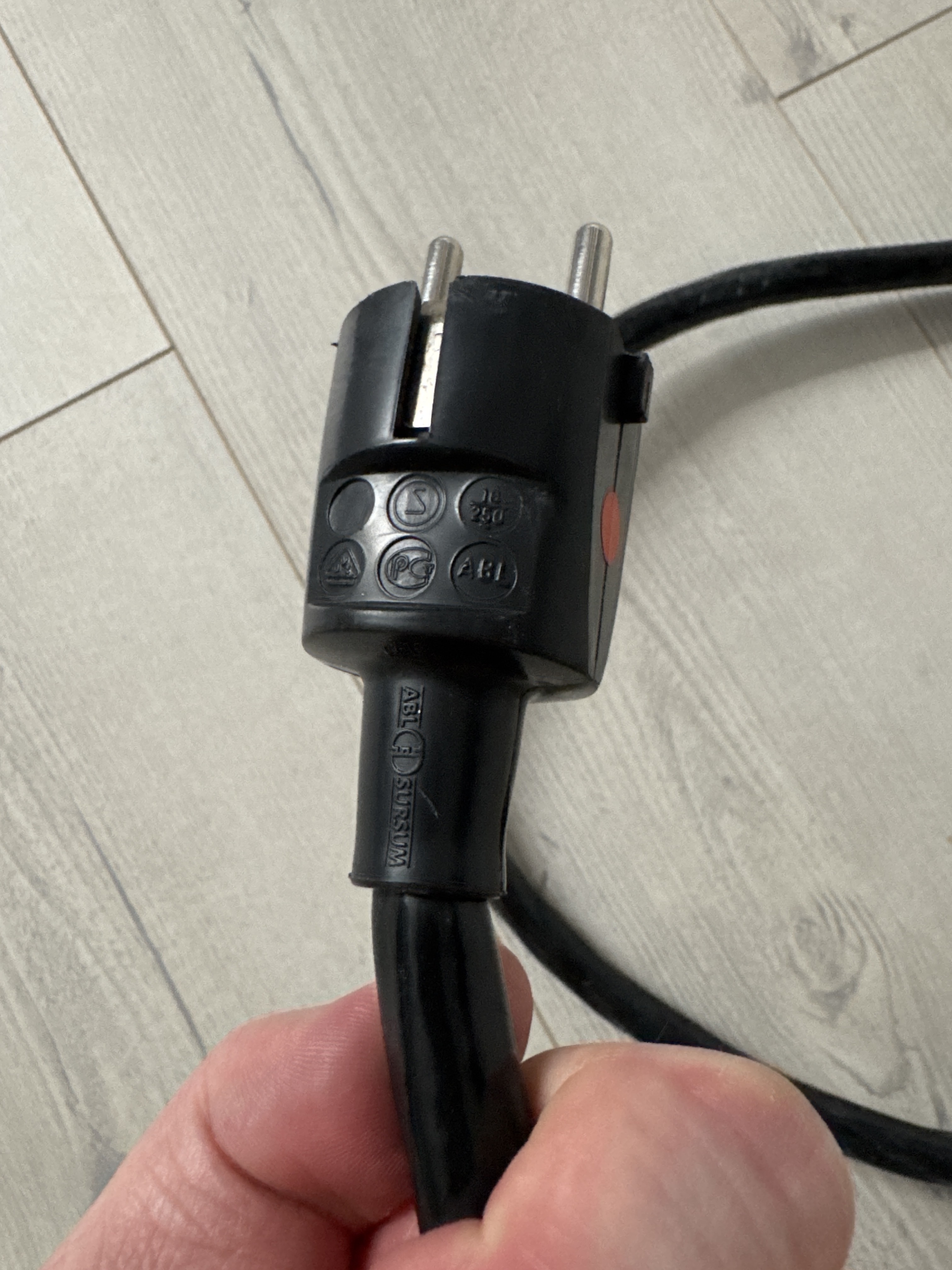
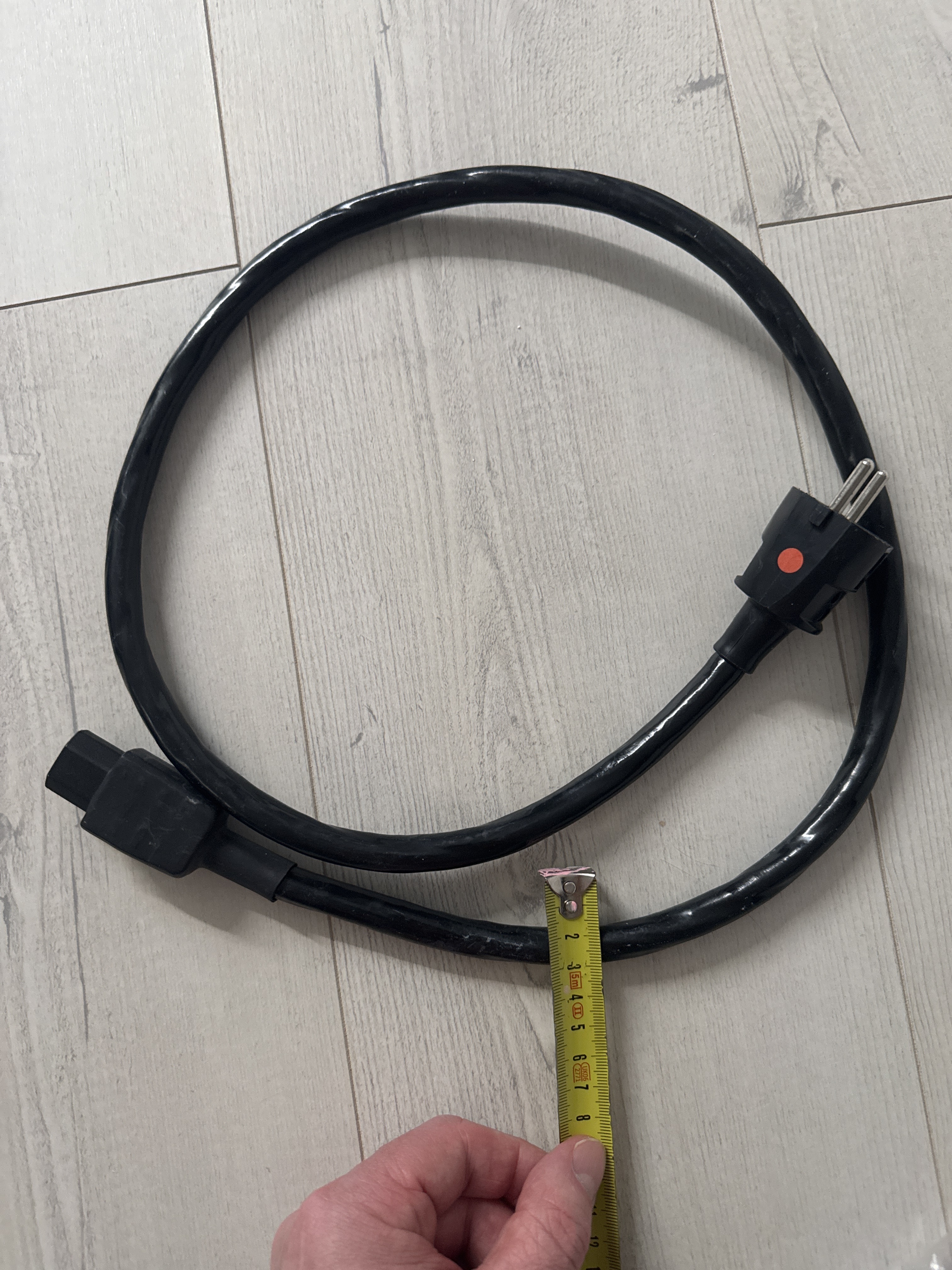
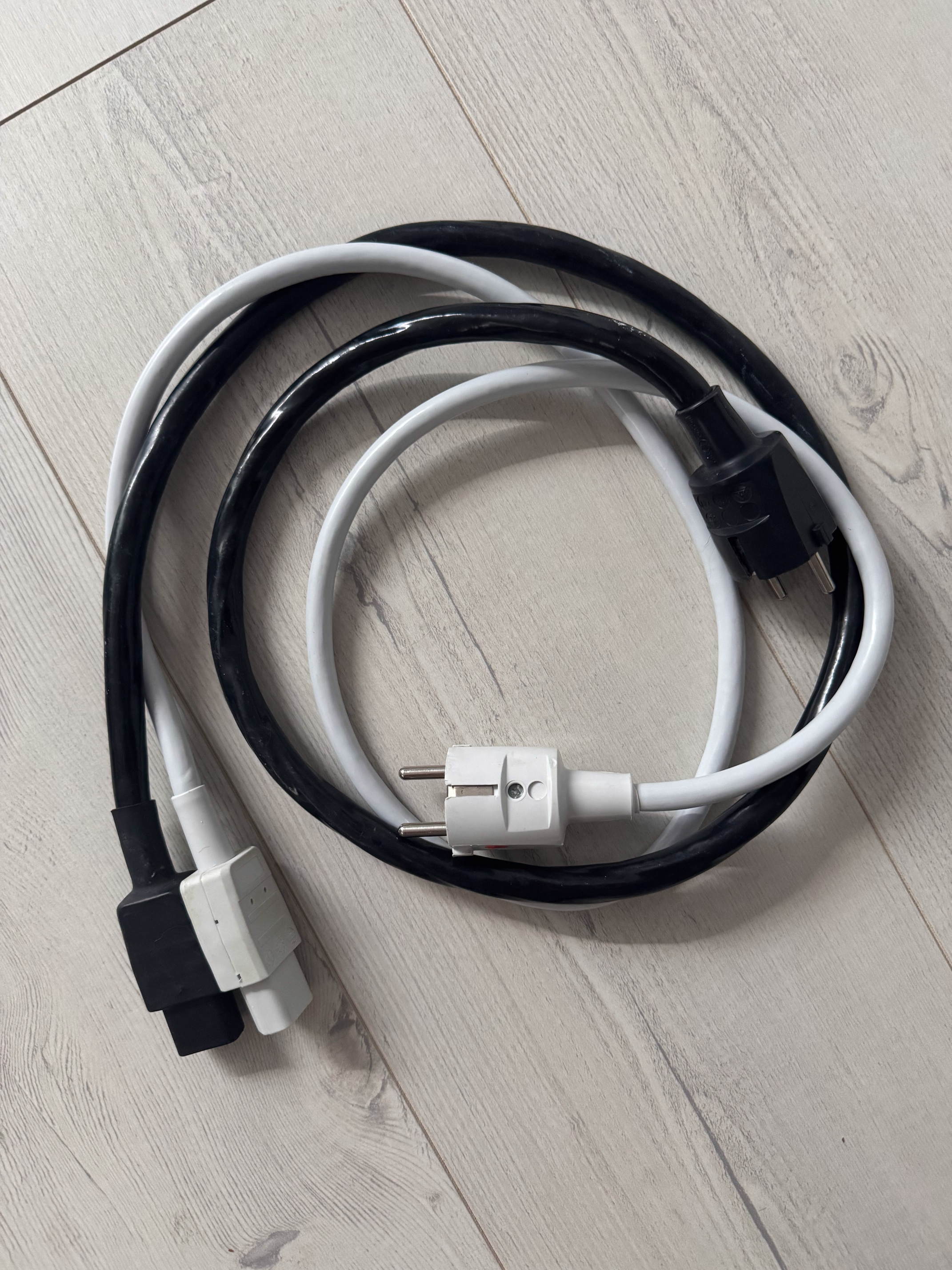
Falls du trotzdem Bedenken hast, kann ich dir auch andere deutsche, hochwertige und trotzdem preiswerte Kabel empfehlen. Sehr solide und leider noch recht wenig bekannt sind zum Beispiel ABL Sursum H07RN-F 3G2.5.
Meine beiden Marantz PM-10 waren übrigens genau mit diesen Kabeln angeschlossen, und kein anderes Netzkabel konnte sie wirklich schlagen. Ich schwöre echt…
Auf dem Foto habe ich die Länge des starren, nicht biegsamen Bereichs am Stecker markiert.
As long as you believe it, it works well. Good news is that your equipment is of high quality, with well-built power supplies, and isn’t affected in any way even by all the noise BS Audio adds to the mains.
I don’t have to believe. I just measure it. 
And I have knowledge about it.
Maybe you are so “lucky” to have world’s worst power…
Interesting question would be whether you had measured the output from your streamer, or an amp. Those work on DC, and if even slightly well built do not care much about AC noise.
Dude, what are you talking about? Go to a doctor.
Apologies—I don’t mean to offend you, but it brings me back to the question: for us “older gentlemen and ladies,” is what is measurable actually still within our audible frequency range?
I, too, subscribe to the view that everything should be measured. However, measurements serve merely as a useful guideline; ultimately, I want to be the one to decide whether something sounds good to me—and whether I actually like the result once the measurements are done. I don’t listen according to measurements; I listen with my ears and with whatever my brain makes of the sound.
Since we’re currently on the subject of power conditioning and cables, let me switch gears for a moment to room calibration. If the result is crap—that is, if it sounds absolutely terrible to me—would you still want to listen to it (simply because the measurements look good)? I certainly wouldn’t. In that case, I’d discard it and keep tweaking things until it sounds its absolute best within my room, to my ears.
But ultimately, everyone should go about it however they see fit.
My 2 cents about power conditioning.
My Last Xmas’ gift was the Puritan Audio PSM156 with upgrade to the Classic Plus power cord. Its cost is 15-20% of the PS Audio P20 (that surely performs much better).
I didn’t have specific issues about power; nevertheless the background noise reduced significantly, making my listening less fatiguing/tiring. The volume level can be raised up much more than it was in the past (I don’t realize the sound pressure is high, sometimes too high, but my wife does and asks me to calm down a bit).
On the opposite, even at low sound level (tipically during the late evening when I cannot disturb my neighbors) I can appreciate all the music details that were usually detectable at a medium sound level.
Weeks ago I remembered to have done an experiment some years ago: powering up my preamplifier and power amplifies with no source on (cd player, FM tuner, streamer) and moving the volume knob to its highest position I could hear a sound from my loudspeakers: I think it was in a medium frequency range.
I recently repeated the same, with all the electronics plugged into the power conditioner, and … no sound coming out of my loudspeaker at all. Absolute silence.