Comparison of streaming amplifiers

@Bonte

For those who slam the RS520 over lack of Spotify lossless via Spotify connect…

I can use my iBasso DX180 SPDIF out (coax via the 3.5mm) to coax in.
I could also move my macbook over and use a USB connection (USB-C to A) and up sample the output.
So these are two ways to get spotify lossless. :grimacing:

While not lossless I can use airplay or BT via my MB20 (toslink in) as well.

To be honest… I really can’t tell any difference and I doubt anyone here could either.
For my age, and the amount of damage I probably did to my hearing over the years… I am amazed that I can hear up to 16kHz. Per Google and other sources… they say my hearing should top out at 12kHz or so.

With respect to the RS520 and power… One of the Audiophile online mags did a review and testing the power. The amp does 250wpc at 8 ohms. But the 4 ohm testing… it went beyond 300wpc so its interesting why Rose posts it at 250wpc at 4 ohms as well. Not that you really need that much power for almost every speaker out there. So yeah Rose has one of the … if not the most powerful AIO on the market.

In reality, most people (and especially the kind who review gear for audiophile rags and haven’t heard anything above 10KHz in decades) can’t tell a high-res from a decent enough MP3 anyway, so as a point of sound quality, Spotify Lossless is somewhat less of a big deal than some people think (unless of course they also start using better masters there).

As a matter of marketing though, Spotify is the most popular streaming service in the world, Rose claims to be an “audiophile” brand, so the lack of Spotify Lossless, which all the competitors have, even at 1/10th of the price, is a bad look.

Using an external device, iBasso or whatever else, works, but kind of defeats the point of having bought a big-screen streamer with fancy control app and stuff. An better integrated amp with coax input (Yamaha, say) would be cheaper and would work just as well for this purpose.

1 Like

:clap:t2: :clap:t2: :clap:t2::+1:t2:

I think it’s great that you’re contributing accurate and honest facts to your post… awesome, keep it up. :+1:t2:

100% facts, that’s exactly how I see it too. :+1:t2:

I’m not an electronics engineer or a software specialist, but why can’t HiFi Rose integrate Tidal and Spotify Connect into the existing hardware/software, as other manufacturers do?

Has Rose really made any concrete statements about this? I’ve read everything here in the chat, of course.

I don’t want to speculate, but I can’t help suspecting that Rose is perhaps not paying fees for something or that something else is not quite right.

I can only link this to one argument that has been posted here in the forum several times:

Other manufacturers selling products that cost half as much or less had integrated it. Even Lyngdorf, which is not cheap, didn’t even need an update for Spotify Lossless.

Hmm, I don’t understand. :face_with_monocle:

:v:t2:

1 Like

Because that would involve doing some actual work on the software development side. And most likely paying some licensing fees, too. From the technical standpoint, of course both the soft- and hard-ware are perfectly capable of supporting both.

1 Like

Hi Boris,

okay, Boris. Short and sweet explanation.

So Rose has too few software developers or too few IT specialists.

So, according to rumors, could it be true that all software development for HiFi Rose is done by third-party providers?

:v:t2:

1 Like

They’re not telling, but it definitely looks like the software work has been outsourced to the lower bidder (in India or similar low-cost low-responsibility offshore likely) and no money has been allocated for any QA.

2 Likes

It’s a sad truth. In the world of streaming, to be a top-tier player in terms of sound quality and functionality, you need outstanding hardware and flexible, user-friendly software. Unfortunately, Rose’s premium devices have a poor user interface.
It’s a shame. :joy:

I have a different approach to the world of audio. A puritanical separation of the digital world from the analog signal. Man is, by definition, completely analog from the Creator. :100: :pray:

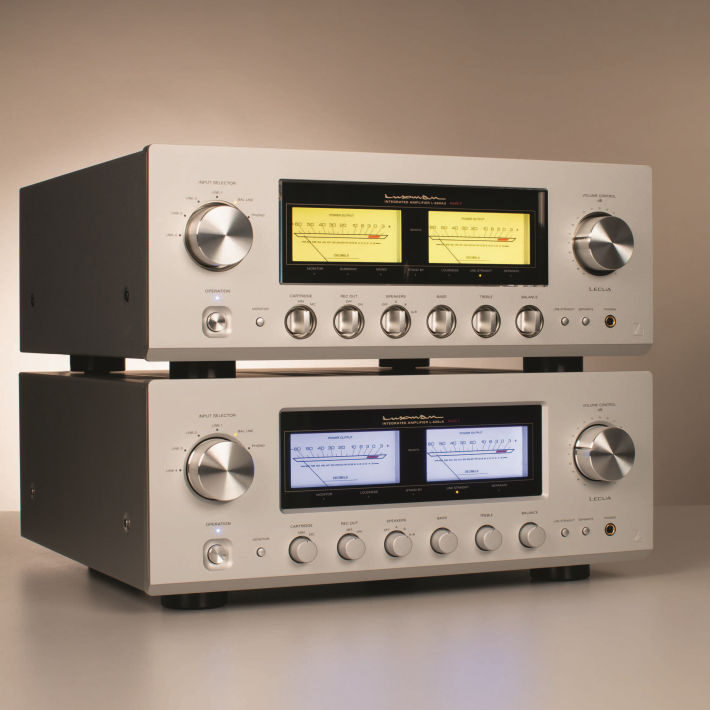
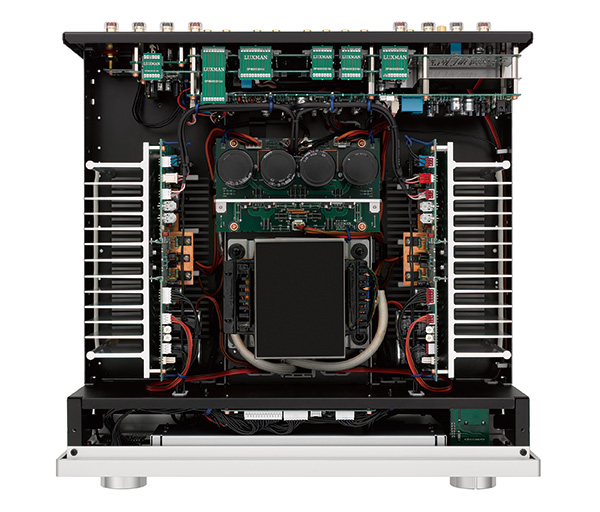
Therefore, I reject all digital amplifiers like Lyndgrof and others with D-stage amplifiers. The beauty of sound lies in the analog world. My personal microcosm is the Class A Luxman L-550AXII. Pure poetry of sound.060-069_Hifi_7-8_2020-022-e1727271740777 gb3

And really, hardware, especially when talking brands like Rose, is all off the shelf. If it were dCS, or Chord, or something like that, ones that actually make their own DACs and stuff (although in reality they aren’t any better in any meaningful way, but one can at least appreciate the effort going into reinventing the wheel). It’s all ESS or AKM DACs, op-amps that come from the same barrel etc. etc. Even the underlying software is off the shelf. The only distinguishing features are how it is all packaged (Rose has a nice screen) and how good software is (Rose’s isn’t). Well, that, and actually living in the 21st century and realizing that sub outputs, room correction, etc. are exactly what anything pretending to be high end (or even half-decent) should have now.

Very nice amp, and looks great! With that power rating though, would definitely be much better paired with something that can do sub integration properly…

There’s no such thing as a “digital” amplifier (no, “D” does not stand for “digital”). A well-made class D amp (that sadly excludes pretty much all the GaN ones, including Rose’s) sounds just as well as a class A one without doubling as a room heater.

“A very nice amplifier and it looks great! With that kind of power, it would definitely be better suited to something that can properly integrate subwoofers…”

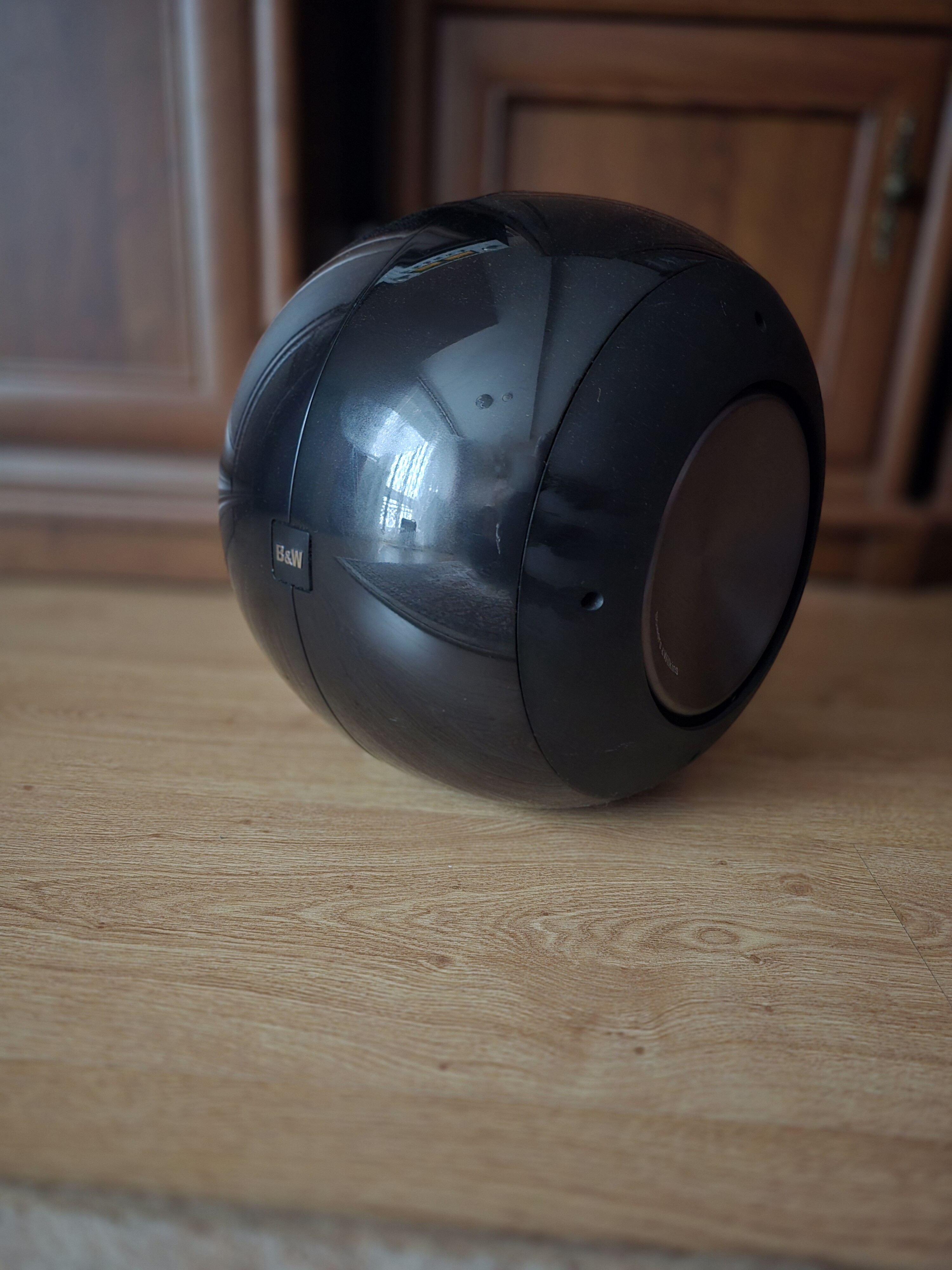
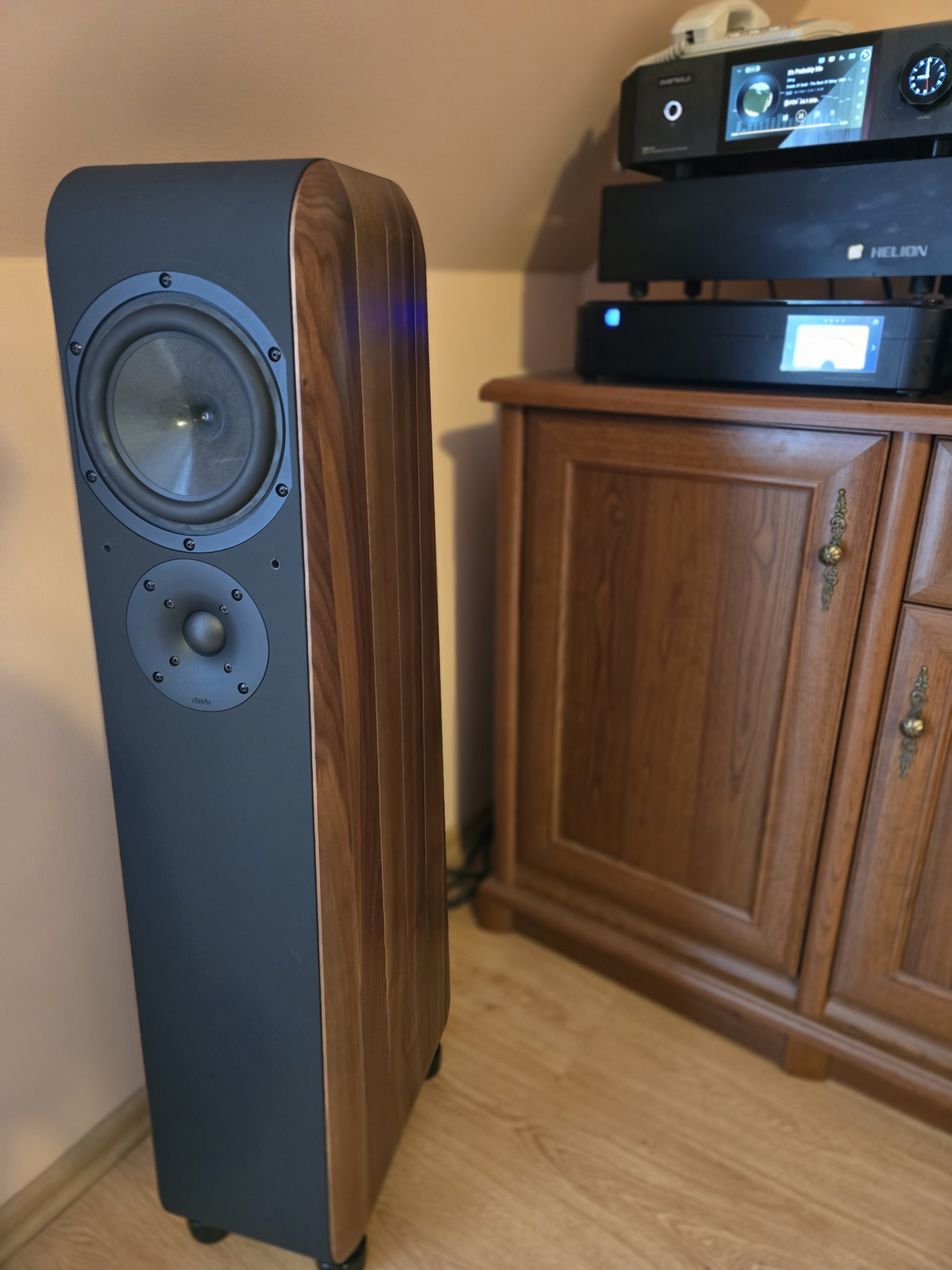
— in Class A, it’s 35W into 4 ohms. I have an integrated B&W subwoofer, but I hardly ever use it. The Chario Aviator Cielo 4 ohm, 92 dB speakers do all the work. The brilliant dome tweeter does a fantastic job linearly from 1200 Hz to 20 kHz. The rest of the frequency range from 25 Hz is handled by three woofers plus a bass reflex port. The subwoofer is no longer needed – it simply moves the floor. :hugs: :pray:


It took me years to achieve this configuration.

“There’s no such thing as a ‘digital’ amplifier (no, the “D” doesn’t stand for “digital”). A well-made Class D amplifier (which unfortunately rules out virtually all GaN amplifiers, including Rose) sounds just as good as a Class A amplifier without acting as a room heater.” You’re thinking. The

Lyngdorf TDAI-3400 is completely digital. Here, the entire signal processing, including equalization, is performed on the digital stream, and the analog signal appears only at the speaker output. As for my L-550AXII getting a bit warm after a few hours, much less so than tube amplifiers. Switched-mode power amplifiers always generate harmonic distortion. That’s why I avoid them. My many years of experience in electronics have taught me what is optimal for the “ideal transmission.”

Beautiful speakers. Probably very good at midrange and treble, but Chario themselves say that they do not go below 40Hz. Depending on the kind of music you listen to it might be “good enough” but personally I would always pair them with a sub.

And that’s exactly where any signal processing belongs.

It just means that they have integrated DAC with the amplifier. There are a few more “power DACs” like that, but they are pretty rare. Still, does not make the amplification part digital, as you amplify, by definition, the analog signal.

At some point they did, but current designs have same or less THD than best class A models. But really this is more of a matter of taste and whether one values efficiency enough. I would push back against people running some SET tube kit and claiming to have a “resolving system” but a Luxman, within its power limits, is as much of a “straight wire with gain” as anything.

“However, this still doesn’t make the amplification part digital, because by definition it amplifies the analog signal.” You’re right. :+1:
But the common misconception is that an amplifier is a device with a low-level signal at the input, and then magic happens and the output is tens or hundreds of watts. Furthermore, as in the aforementioned Lyngdorf TDAI-3400, the analog or digital signal is corrected.
By definition :rofl:, distortions in a digital signal can also be amplified.

BorisM

“at one time it was like that, but current designs have the same or lower THD than the best class A models. In fact, it’s more a matter of taste and whether someone values ​​efficiency. I would object to people who use some set of SET tubes and claim they have a “distribution system”, but the Luxman, within its power limits, is as good an “amplified cable” as anything else.”

Since in modern high-end amplifiers the distortion is at an inaudible level - in reality, each of us buys what we like. Here I share your opinion. :100:
However, tubes, due to the technology used / microphonics, constant change of operating points, annealing of electrodes, etc. / will never reach the level of a “pure amplified wire”. All this nonsense about a warm midrange is just the imagination of hard-of-hearing so-called audiophiles. And as for Chario and the 40Hz band, it has, according to manufacturer -3dB – that’s why I slightly boost +5dB around 30Hz in the DSP EQ of my DMP-A10 and then I don’t need a subwoofer.
They really pack a punch on the bass. :hugs:

That’s an amplifier. Lyngdorf specifically is more of a power DAC where the digital signal directly controls high-power output. Still not a “digital amplifier” unless one wants to engage in some semantic gymnastics. Whether this approach is better or not is open to debate, but a properly set up Lyngdorf system sounds very good.

What is a distortion in a digital signal?

Yup. Unless you go for some very “audiophile” brand performance that is well beyond anything a human can hear is achievable, and at a very reasonable price point. Everything else is icing on the cake.

Well, there are some tube amps that, at least for a while, perform pretty much as well as solid state designs. Of course you have to keep swapping tubes to keep them operating that well.

Some also pretend to like the distortion some of tube designs create. And soft clipping. Calling tubes HiFi in the 21st century is laughable, of course.

There seems to be an actual filter in them at that frequency. I am sure they can output something below that but on a first look it appears to be a brand that does not really send their products to be measured… And I can’t ask you to taker REW to it :slight_smile:

Looking at the design, it seems very unlikely that it would have much output and little distortion below 40Hz. If you like the sound you like the sound, but personally, rather than forcing them to play something they aren’t really designed to, I’d use the sub integration that your DMP-A10 already has and crossed them over around 50Hz or so. Just my opinion.

“I would use the subwoofer integration that your DMP-A10 has and cross them over at around 50 Hz.”

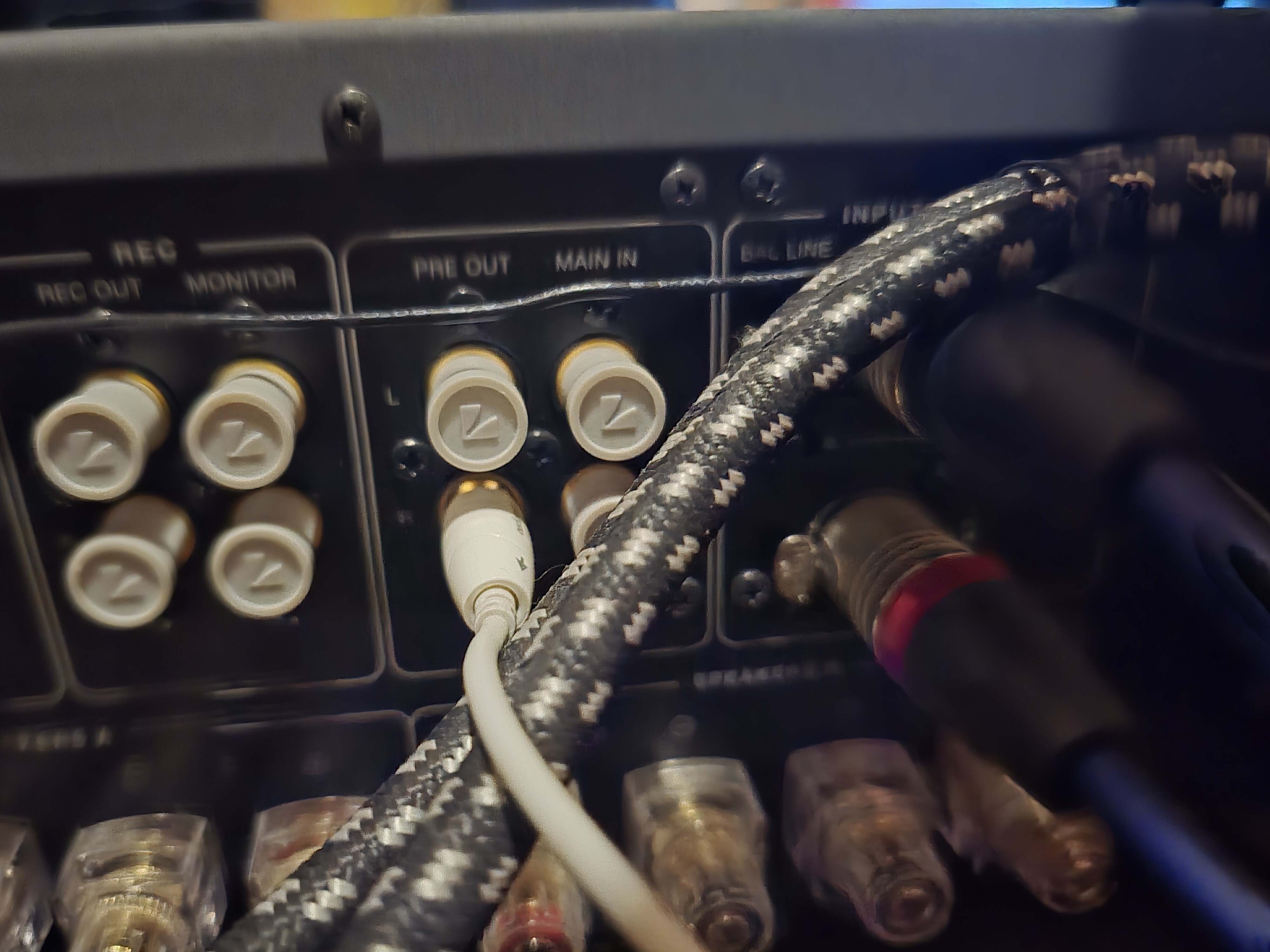
I have the B&W PV1 integrated with the Luxman L-550AXII and a cutoff of 70 Hz. But I don’t turn it on because there’s no need for it. These Chario speakers have an NRS (Nearsfield Reconstruction System) bass-reflex system with a downward-firing port. And it plays low bass quite well. :yum:
And thanks for the advice.
Maybe I’ll test it sometime with the calibration system.

I am sure it sounds nice – humans can reconstruct missing fundamentals from harmonics quite well. But, again, depending on what exactly you listen to, you might be missing things without even realizing it…

That’s just an expensive way of saying “these are ported speakers” :rofl: But the specs are given with the port, of course. And 6.5 inch woofers in it are still 6.5 inch, there is only so much bass they can do.

A0 on a piano is what… 27.5Hz, Cielos will be very much lower than -3dB there, and probably distorting more than one would like. And that’s not an organ, or some synthesized EDM made to make windows shake. Again, this is veering into personal priorities and preferences. Myself, I don’t care for EDM, but at least reproducing the entire range of a piano is a minimum requirement. I have a real one here that kids are banging on all day, and the leftmost key is supposed to be very loud. If the system reproduces it at a significantly lowered level it’s not really accurate. And I am not sure that it can even be generally EQ’d away – either you have to drop the overall levels significantly, or it will do some nasty digital clipping if you try to just increase levels around 30Hz significantly enough.

Of course the best thing to do is to actually run some measurements. Even something like Housecurve on an iPhone should give a pretty good indication of what the range actually reproduced in the room is.

1 Like

Thank you. :+1:
Good tips. I’ll play around with my B&W PV1 one of my free weekends. It’s a nice subwoofer in an aluminum enclosure - 500W packs a punch.