It’s all good, Boris.
I understood you. 
And knowing a few swear words can be an advantage, too. 
 I can’t stop thinking about iFooFoo whenever I see your posts.

It’s all good, Boris.
I understood you.
And knowing a few swear words can be an advantage, too.
I can’t stop thinking about iFooFoo whenever I see your posts.
To eliminate the ground loop, there is a floating shield implemented by Melco, AIM, Vivace and other serious manufacturers.
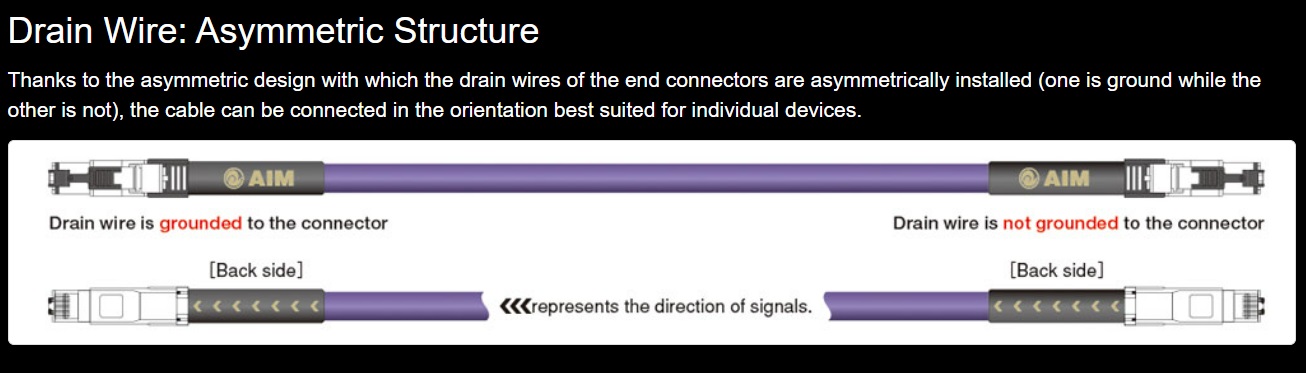 ![AIM - Drain wire Asymmetric structure |1306x373, 75%]
Comes in handy…
They actually make Rose looks like a serious manufacturer. Most Rose devices are at least reasonably well assembled. iFooFoo has cost-cutting design that you normally only find on Rel boomboxes and AliExpress gizmos.
There’s something very wrong with using “melco” and “serious manufacturer” in the same sentence.
Boris. reread what I wrote.
You’re an idiot.
If your ethernet cable is made to spec… you will not have a problem w a CAT 8 patch cable.
Your USB-C 4 cable has more shielding than the first gen USB-C and hence can xfer more power along w higher data rates… .Is this going to be a problem because its a shielded cable and can cause “ground loops?” Oh no!
Really?
You wrote nonsense, as usual. Quite expected for someone who thinks a ground loop is caused by an absence of a loop…
…and here he is again…hello Mike…
You two are my favorite people to post in the forum.
Speaking of ground loops
In all my years of hi-fi, I’ve never had a ground loop. We have a well-built power grid and a stable power supply. Everything is properly grounded and has worked perfectly ever since I started with hi-fi components.
And yes, I did have a power conditioner about eight years ago and thought, “Now the angels are whispering their sweet, beautiful voices to me!”
But no, I didn’t notice a single difference. So the power conditioner went back to my hi-fi dealer.
Just like a CATxxx high-end cable—absolutely no change whatsoever. How could it be otherwise? My router’s RJ45 ports are there, whether good or bad. And how is a cable from the router to the network device supposed to improve anything, like a well-shielded CAT 6e or 8 cable (with a cable length of approximately 4 meters from the router to the Lyngdorf device)?
The supposedly good ($$$$) high-end CAT cable would transmit the interference coming from the router just the same.
Well, I’m so tired of this topic; I can’t stand hearing this nonsense anymore.
But I’d be happy to invite those guys with the golden ears to an A/B test sometime.
Those might be more common with electric grids designed by Edison and never upgraded since then
In any case, by definition of a loop, a ground loop (with some adverse effects) is only possible if two devices are plugged into electrical outlets with different ground potentials. If one of the devices does not have a ground prong on its power cable, no mater what Smegmel Der Schwul blows out of his behind, a ground loop is not possible, indeed, one of the methods to diagnose or prevent ground loops (NOTE: not recommended as a long term solution for safety reasons) is disconnecting/insulating/somehow disabling the ground prong on one of the devices.
And yes, @Smegel the stupid, USB cables can also introduce ground loops.
Normal Cat 6(whatever) cables are very much Unshielded Twisted Pair actually. Unless you are wiring a factory floor or something equally electrically noisy, twisted pair’s noise rejection is all you need. Using a shielded cable, yes, only increases the possibility of having a ground loop without providing any benefit in home use.
Hi Boris,
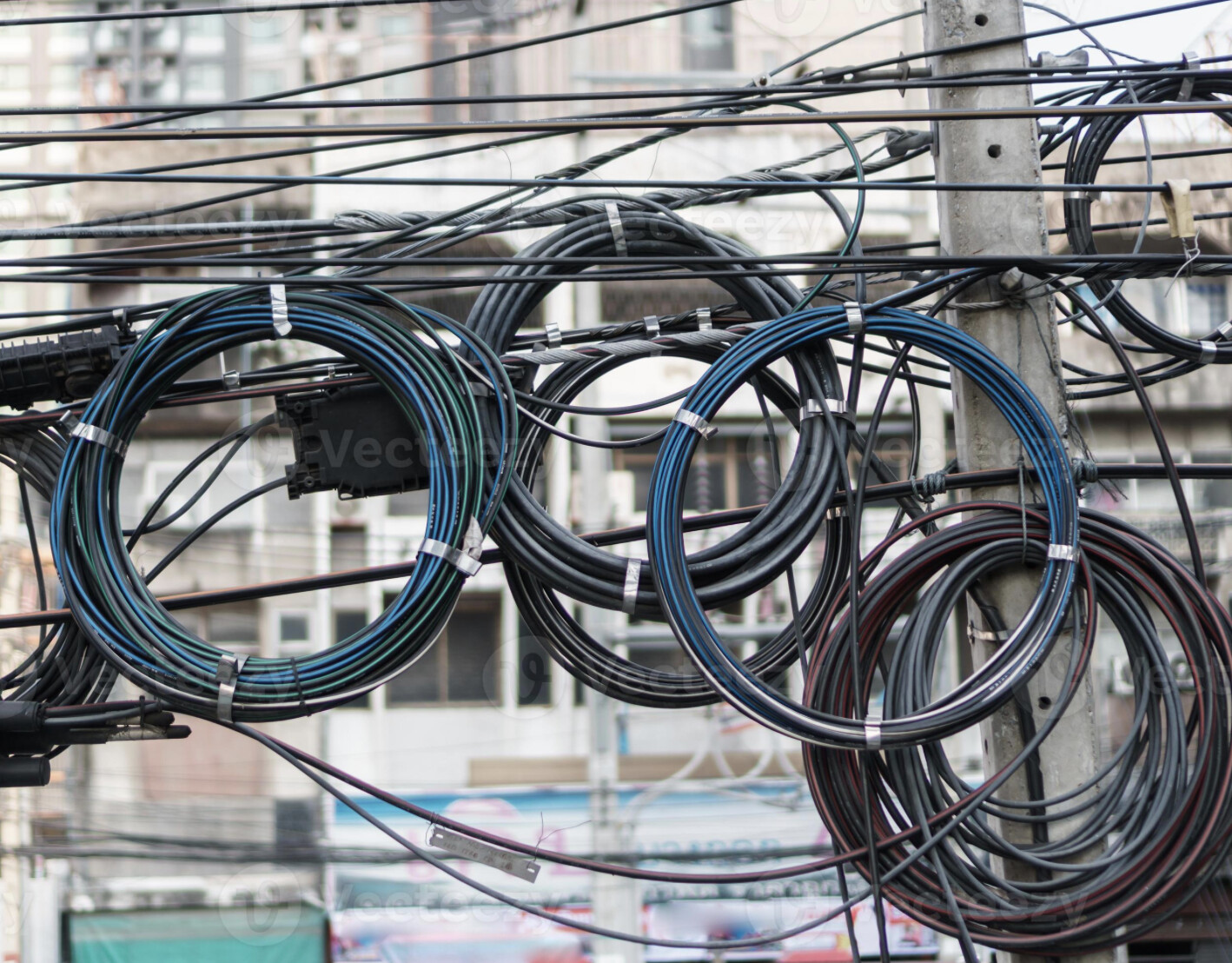
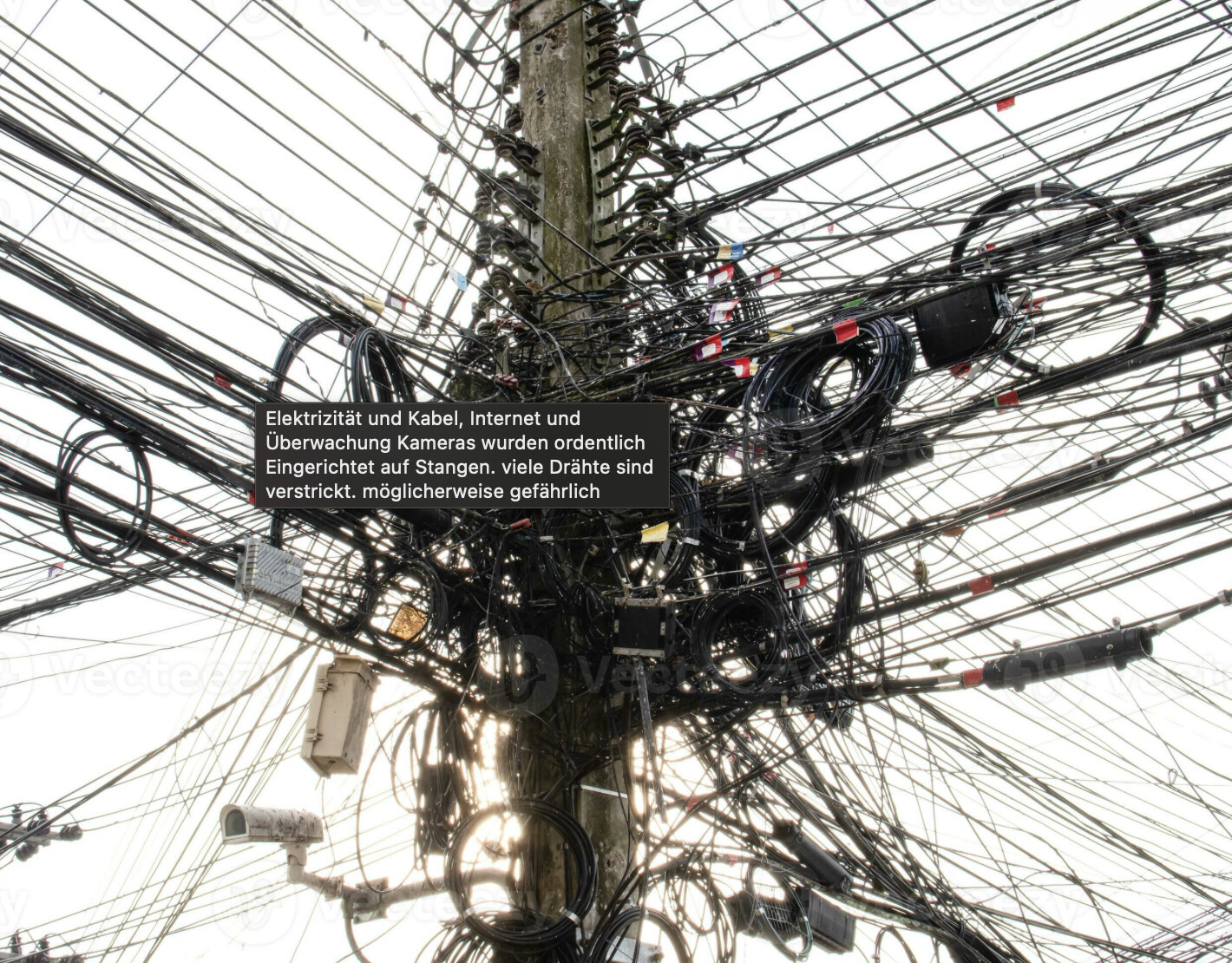
When I see things like this that still exist today, I wouldn’t even dare to plug an electrical appliance into a wall socket.

I am not a highly educated person, but I consider this basic knowledge a given when plugging hi-fi equipment into a wall socket.
Why is proper grounding and equipotential bonding of your electrical system so important?
First and foremost is the safety of personnel in the building. Proper grounding and equipotential bonding of the electrical system can be crucial in preventing an employee from receiving an electric shock and ensuring they can go home safely in the evening. It’s that important.
Other components that can be affected by improper grounding and equipotential bonding include sensitive equipment and low-voltage signals. While these components are safety-relevant, their functionality is also essential for production.
Absolutely correct!
Okay, maybe I’m being a big talker now, because I’ve never had this problem before.

Yup.
Some devices are designed to work with only two prong power cables. They can’t create ground loops ,of course. Some a designed to have a ground connection and it should not be blocked.
You are also less likely to see a ground loop in a smaller apartment than in a big house with multiple electric branches …
I have a small apartment, but it’s in a building with 27 other apartments.
There’s also the central heating room (gas-fired boiler) with all the bells and whistles, like circulation pumps.
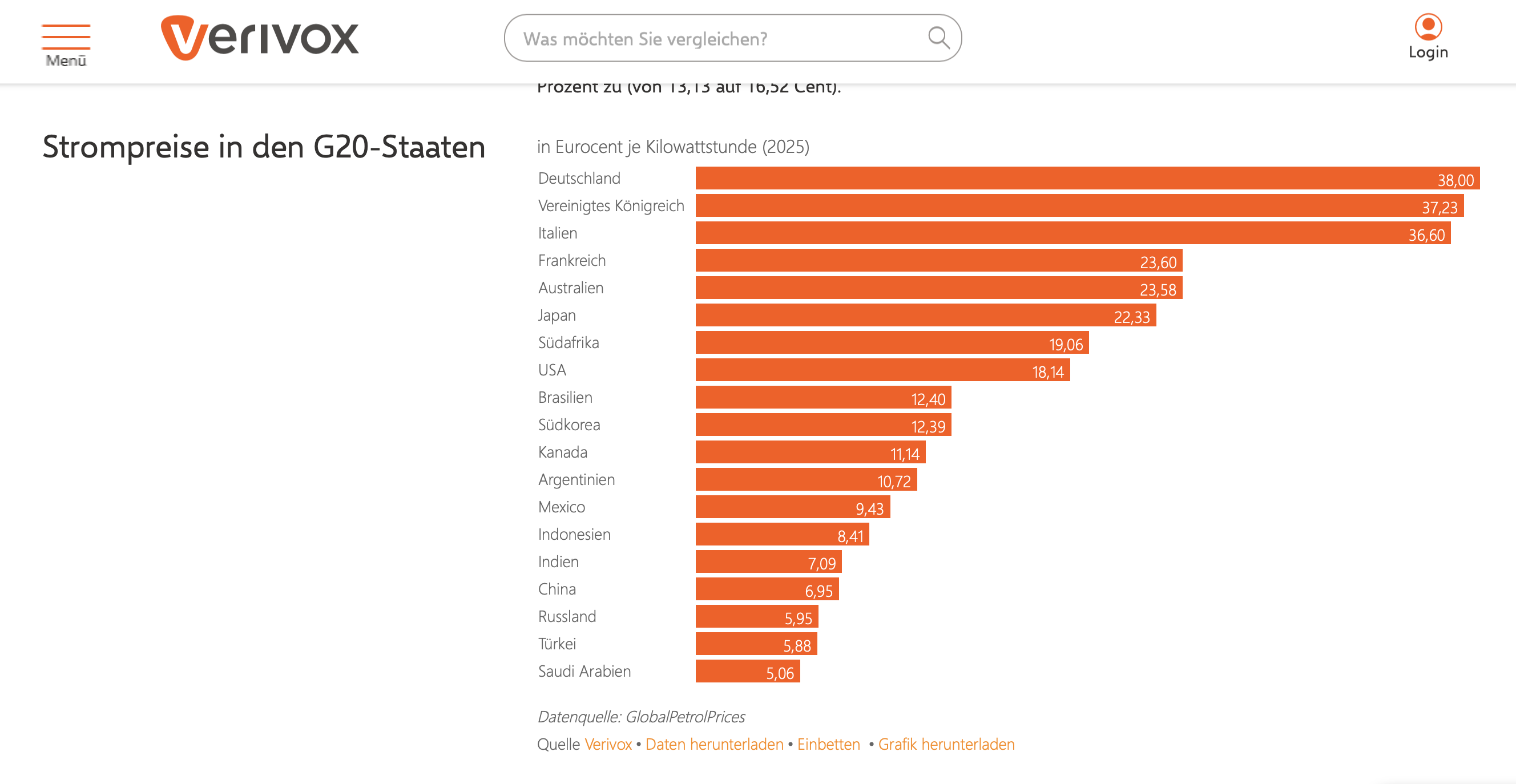
We have exterior lighting, and everyone has large appliances like stoves and washing machines. We also have several junction boxes (branches). But I’ve never had any problems with small appliance plugs (two-prong) or IEC connectors, which are three-prong anyway. When it comes to electricity, Germany isn’t actually that bad, but we have to pay a fortune for it, thanks to the stupidity of the Greens, who shut down nuclear power plants, are driving up inflation, and then buy expensive electricity, for example, from France.
We’re the country with the highest electricity prices.
Well, at least it’s a record, and we’re being milked even more. I’m just waiting for the udder to run dry; hopefully, then a lot of people will wake up. 
I don’t know how your grounding is run, but it might be better designed and ensures that everything is at the same potential.
As for the Greens, they would make OK fuel for power stations…
Dude! You made me laugh… did you vote for Merkel ?sp?
My condolences btw…
For 20yrs I lives less than 500 feet from the sub station so we had really good clean power.
For the 10yrs prior I lived in an apartment that had lousy power and you could hear the Tripp Lite power conditioners always switching between good and low.
Now I’m in a new condo that’s less than 1km away. Still pretty good.
It was new construction when we moved in. Had an issue where the panel wasn’t properly grounded so it would always trip every so often. While they were figuring it out, we had the local electric company out to monitor the power in to our smart meter and then from smart meter to the unit. So I know the power coming in is clean. (relatively speaking.)
But getting back to the issue of ethernet cables… going w CAT 8 will give you shielding along w a slightly larger gauge of wire. (one size larger)
You can do what you want.
I’ll stick w the CAT 8 and no issues w ground loops.
(ever)
Note: Here in Chicago… No Romex all wiring is in solid conduit unless you’ve added a box which would be in a whip (flexible conduit up to 6’)
Where you run into issues is w an older home or someone decided to do their own wiring and its not up to code.
I’ve wired everything up with CAT 8 cable.

It works. And at least those can be real Cat 8 cables, unlike “Cat 7” with RJ45’s. Doesn’t give any useful improvement over 6a, but generally shouldn’t be any worse either, as long s there is no meaningful price premium…
So Boris yet again fails to grasp that if the SKU exists then the product exists.
(Do I really need to show you the links to CAT 7 RJ45 patch cables? )
And yes… use CAT 8. The cost difference between CAT 5, 6, 7 and 8 patch cables is noise.)
The jump up to CAT 8 is a larger gauge wire, along w shielding. This allows up to 40Gb/S throughput which is going to be the max speed you can get on copper w an RJ45 connector. You can get up to 100Gb/s w SFP or SFP+ connection. And this is only good for short lengths like patch cables.
Also just to add.
If you are looking at SFP+ switches… look at Mellanox / Nvidia switches.
There’s 1/2 rack 16 port 100GbE switch that retails around 10K. Prices will vary a bit.
If you’re serious about your home network this would make a lot of sense… Then your NIC / DPU cards run about $1500 - $2000 depending on features.
For the feeble-minded, sure. Enough audiofools are willing to pay for it, so someone will sell it, even if it is not real. Just like mnost of “high-end audio” stuff.
Cat 8 is too stiff, and unless yuo just run the cable 10 feet in your mom’s basement price difference adds up for something that offers zero benefit.
Boris… just because you live in your mommy’s basement yelling at her to make you hot pockets while you play video games doesn’t mean the rest of us do.
I don’t know where you buy your cables but CAT 8 cables are not ‘too stiff’.
So, you’ve never had a real Cat 8 cable either. Well, that you can only get fakes from AliExpress is your problem…
Hey Mikey…please stay grounded, or Boris will give you a taste of your own medicine.
Boris  Mikey
Mikey
LOL…Sorry Mikey
But seriously now!
As I posted, everything on my system is CAT 8.
Mikey, I’m sorry, and I have to agree with Boris again.
My CAT cables are also very stiff. So, forget about quickly wrapping a cable around a door frame.
My cables even said “with extra shielding” on them…yeah, right …I don’t believe that.
That’s why I initially assumed the cables were so stiff.
The only cable I have that isn’t CAT 8 is a CAT 6e to the streamer (TDAI and what was already connected to the 520), because it and the Rose devices have a 100 Mbps interface. CAT 5 would even be sufficient for that.
At the time, I only opted for CAT 8 to ensure I was somewhat future-proof.
But why???
I don’t work from home and I don’t need to move large amounts of data back and forth to NAS or anywhere else.
And if I were to change anything again in my remaining life, my home network would consist entirely of fiber optics. Like I said…if!
…and remember, Boris will bring out the big guns if you claim something again that might not be entirely true.