Everything written here is physically verifiable, clearly measurable,
and has been confirmed multiple times through blind tests.
https://www.hifiaktiv.at/startseite/
Here is an excerpt from the website: once again, the question of cable sound.
It has become common practice to use PC-based source devices. From a technical and sonic standpoint, there is nothing to object to here. But has anyone ever stopped to consider exactly which “cables”—specifically the microchips and mass storage components—all this data actually travels through? Even Hi-Fi magazines have yet to utter a word on this subject, despite having published numerous reviews regarding the sonic differences between digital cables. More recently, even network cables are being judged and categorized based on their (alleged!) sonic characteristics. Just a sudden thought: are there also sonic differences between the various modems, routers, and splitters out there?
The same applies to “premium” power cables, which sometimes cost as much as high-quality amplifiers. How is it possible to manipulate countless people into believing in such things—and spending a fortune on them? It truly leaves one speechless.
High-end Hi-Fi headphones are (rightly) credited with an extremely precise level of audio reproduction—a standard that loudspeakers can rarely match. Yet, the connecting cables supplied with these headphones are anything but high-quality. In most cases, they are three meters long and consist of nothing more than very thin, standard stranded wire. How do the “cable and connector gurus” explain that?
Time and again, Hi-Fi magazines emphasize the importance of removing the metal jumper strips connecting the bi-wiring terminals on loudspeakers and replacing them with actual speaker cables. This is supposedly meant to result in a significant improvement in sound quality. How absurd! Both within the electronic components (upstream) and within the crossovers (downstream), there are hundreds of such metal connections—and rather puny ones at that—taking the form of traces on the printed circuit boards. Surely, then, swapping out those two extremely thick—and at most 5 cm long—metal jumper strips for a piece of stranded wire cannot possibly yield any improvement! According to their claims, it supposedly even makes a difference whether the speaker cable is connected to the top or the bottom terminals—even though the poles involved are exactly the same. Another recommendation suggests: “Connect the positive pole at the top and the negative pole at the bottom—or vice versa—but under no circumstances ever side-by-side.” All of this is as utterly nonsensical as anything could possibly be. But then again, that is just typical Hi-Fi!
Anyone convinced that there are audible differences between the countless cables currently on the market—be they importers, reviewers, retailers, or end consumers—should try conducting a blind comparison. The outcome of such a test is already 100% predictable. Yet hardly anyone will be persuaded to do so—least of all those who stand to profit from this great Hi-Fi lie.
To conclude this topic, here is a piece of sound advice: instead of investing in expensive cables, invest in room acoustics—for you can never have too much of a good thing in that regard. A single square meter of acoustic absorption material, positioned correctly within your listening room, will undoubtedly yield far greater sonic improvements than simply swapping out standard cables for the most expensive ones money can buy.
Time and again, Hi-Fi magazines emphasize the importance of removing the metal jumper strips connecting the bi-wiring terminals on loudspeakers and replacing them with actual speaker cables.
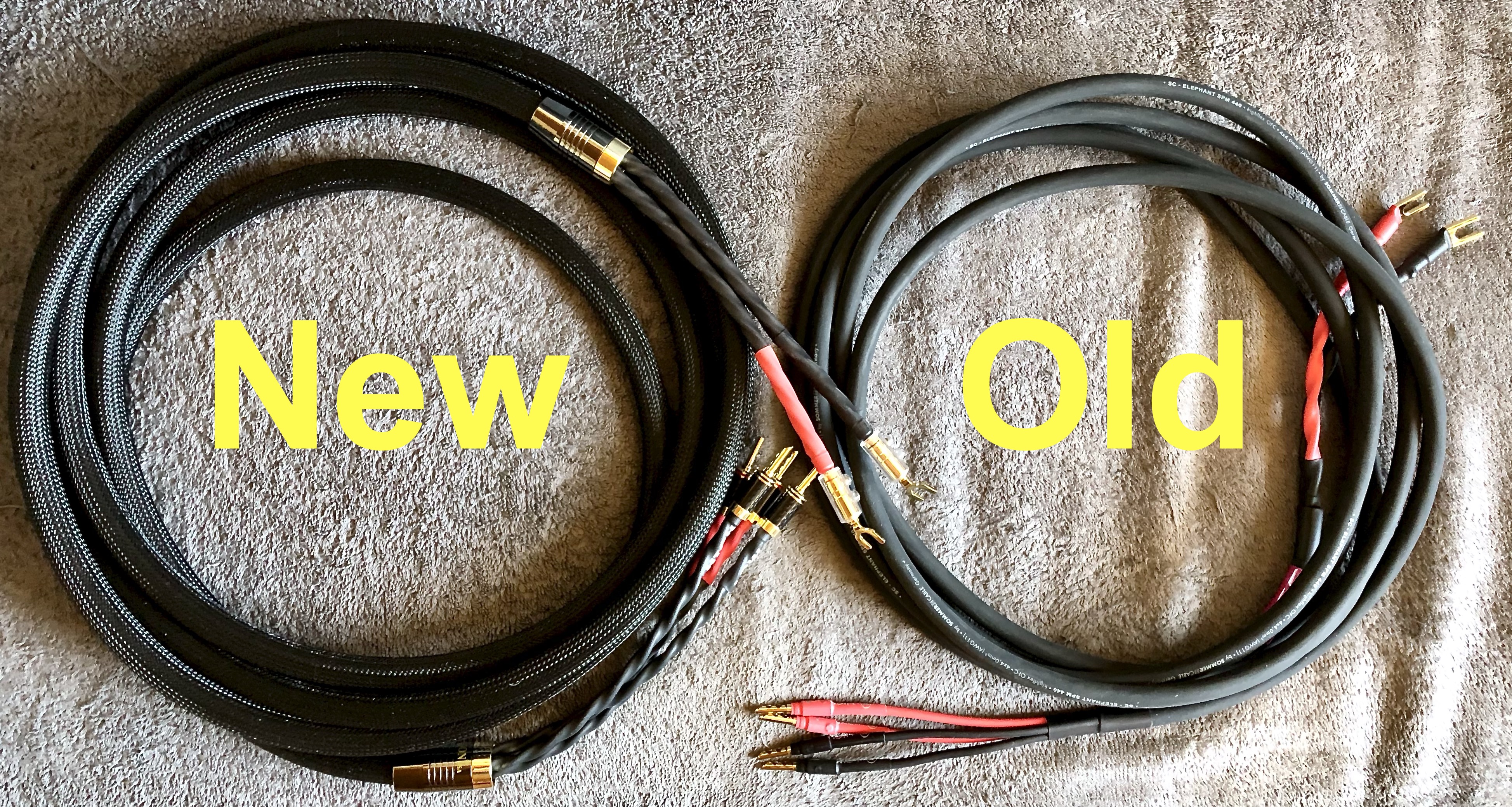
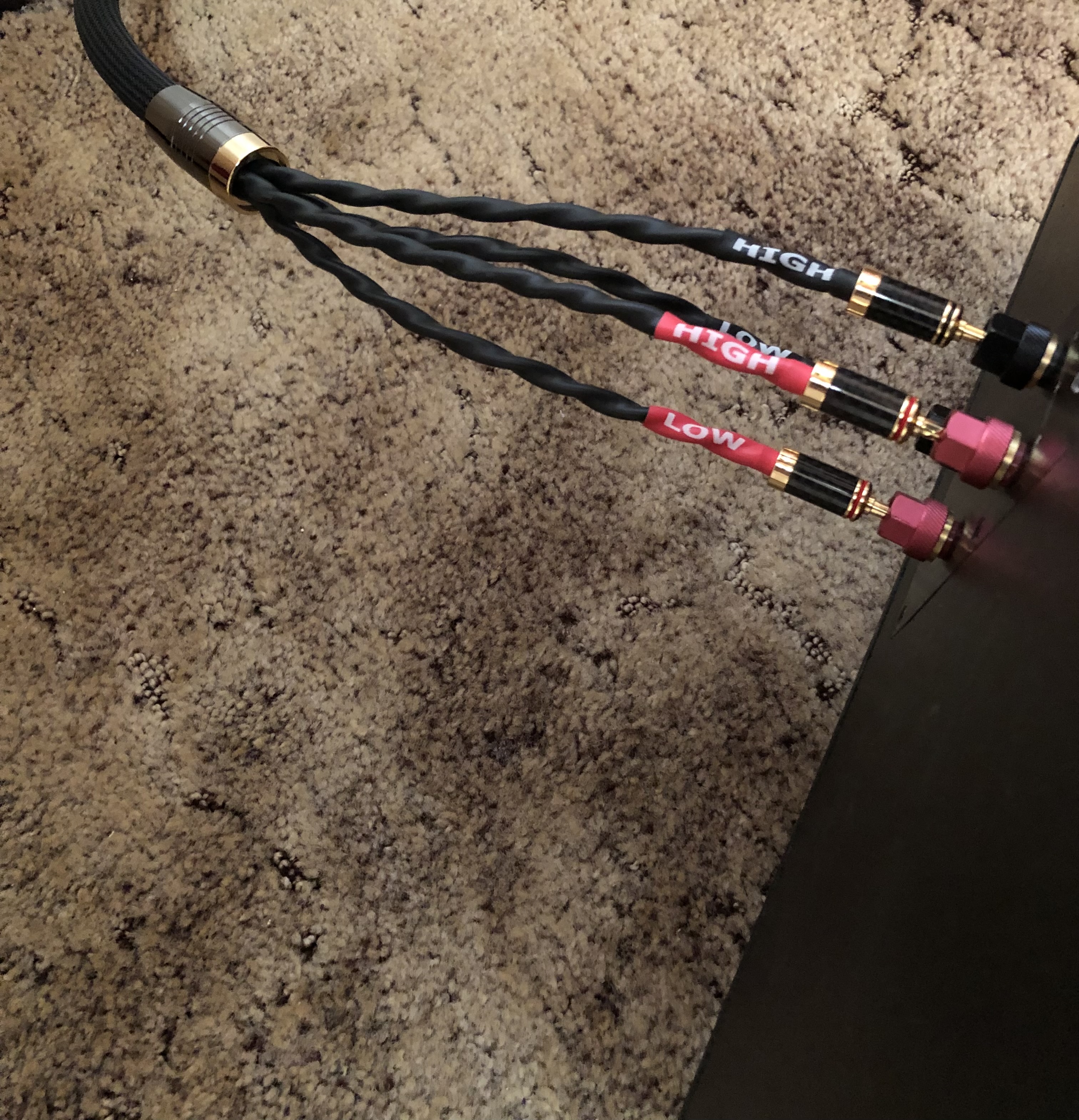
I did the same thing and had my speaker cables custom-made in this way. I hear no difference compared to when the original metal jumpers are installed. Furthermore, the cable features a 5mm² cross-section at each terminal connection, while on the amplifier side, it expands to 10mm² per pole (both positive and negative).
Additionally, this constitutes merely “pseudo bi-wiring,” as the amplifier simply features standard dual speaker outputs.
In short, my conclusion is this: whether you remove the metal jumpers and replace them with cable jumpers—or, as I did, simply purchase a cable designed this way from the start—it made absolutely no difference in sound quality for me. I bought the cable solely for aesthetic reasons.